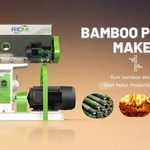




Bamboo can be processed into biomass fuel pellets when the raw material is properly prepared and the pelletizing system is matched to the production requirements. For buyers planning a new project, however, selecting the right machine involves more than comparing equipment prices.
A bamboo pellet making machine for sale should be evaluated according to the type of bamboo available, moisture content, required production capacity, pellet diameter, electricity supply, and expected operating hours.
Start With the Raw Material
The first step is to identify exactly what type of bamboo material will enter the production line.
A factory may receive whole bamboo, bamboo branches, bamboo chips, or processing residues. These materials can have different dimensions and moisture levels.
Whole bamboo normally requires cutting before crushing. Smaller chips may go directly to a hammer mill if their size is still too large for the pellet mill.
Removing stones, soil, metal, and other foreign materials is also important before processing.
Check the Moisture Content
Moisture has a direct effect on pellet formation.
Fresh bamboo generally contains more water than the pelletizing process can handle efficiently. In this case, a dryer may be required before pelletizing.
Dry bamboo residues may not require additional drying.
This is why buyers should test their actual raw materials before purchasing equipment. A production line designed without considering moisture can result in unnecessary equipment or unstable pellet formation.
Why Crushing Capacity Matters
The crushing system needs to keep up with the pellet mill.
If the hammer mill produces material more slowly than the pellet mill consumes it, the pelletizing machine may have to wait for feedstock.
A properly sized crushing section creates a steady material supply.
Particle size also matters. Excessively large bamboo pieces can increase the load on the pellet mill, while unnecessary fine grinding can increase power consumption.
How Should Pellet Diameter Be Selected?
The required pellet diameter depends on the final fuel application and customer requirements.
Different dies can produce different pellet sizes. Buyers who plan to sell several pellet specifications may want a configuration that allows relatively convenient die changes.
The pellet length can also be adjusted through the cutting system.
Before ordering the machine, the desired pellet diameter should therefore be clearly defined.
Comparing Bamboo and Wood Chips
Bamboo is often processed in biomass plants alongside other lignocellulosic materials.
Wood chips are another common feedstock. A wood chip pellet making machine for sale may appear similar to bamboo pelletizing equipment because both machines compress prepared biomass particles.
However, the raw materials are not identical. Wood chips can vary in hardness, fiber structure, moisture, and bulk density, while bamboo can have different characteristics depending on its species and processing stage.
The equipment should therefore be tested with the actual material whenever possible.
What Auxiliary Equipment Is Needed?
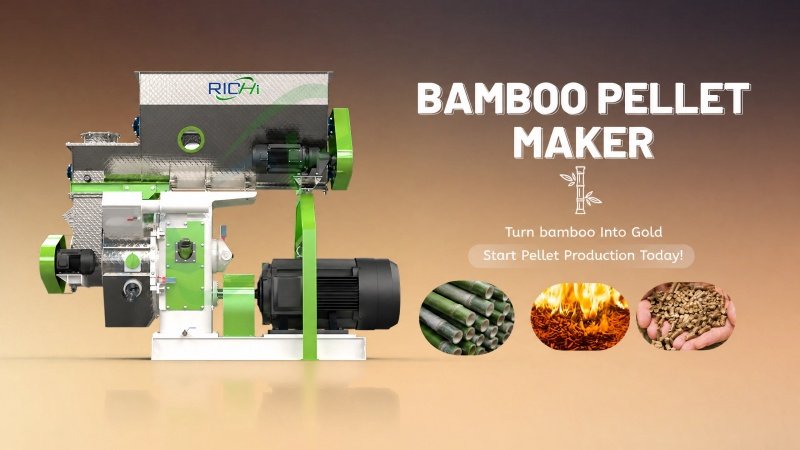
A complete bamboo pellet line may include:
- Bamboo cutter
- Hammer mill
- Dryer
- Conveyor
- Pellet mill
- Cooler
- Screener
- Storage equipment
- Packing machine
Not every project requires all of these machines.
For example, a producer using already dried and properly sized bamboo residues may not need a separate dryer or heavy cutting system.
The final configuration should follow the actual production conditions.
Why Is Cooling Necessary?
Fresh pellets leave the pellet mill at a relatively high temperature.
A cooler reduces the temperature and helps stabilize the finished product before storage. Screening then removes fines and broken pellets.
For commercial production, these two stages help prepare the pellets for packing and transportation.
A small operation can use a compact cooling and screening arrangement, while larger factories can integrate continuous conveying and automatic storage.
How Much Capacity Is Needed?
The correct capacity depends on the amount of bamboo available and the planned operating schedule.
A producer processing several tons of bamboo per day needs a different configuration from a small workshop producing fuel pellets only a few hours per day.
Future expansion should also be considered.
Purchasing a machine with significantly more capacity than the available raw material may increase the initial investment without improving actual production.
What About Electricity?
Motor power, voltage, frequency, and phase should be confirmed before ordering equipment.
The total electrical load includes more than the pellet mill. Crushers, dryers, conveyors, coolers, fans, and packing machines may all consume power.
The factory’s electrical infrastructure should therefore be checked against the complete production line.
Can the Plant Be Expanded Later?
Yes, when the original layout allows sufficient space and material flow.
A small project can initially focus on the essential processing stages and later add storage bins, conveyors, automatic packing, or additional pelletizing capacity.
A modular layout can make future expansion easier without completely rebuilding the factory.
A Typical Production Process
A bamboo biomass production line can follow:
Bamboo → Cutting → Crushing → Drying if Required → Pelletizing → Cooling → Screening → Packing
A complete pellet plant should be designed around this process and the characteristics of the raw material.
Before requesting a quotation, buyers should provide the bamboo type, moisture content, required output, pellet diameter, electricity specification, factory dimensions, and preferred level of automation.
This information allows the equipment supplier to prepare a more realistic configuration instead of offering a generic machine.
For producers comparing different bamboo pelletizing solutions, check this site for additional information about biomass equipment and production-line design.
Related Post: https://pelletizerequipment.com/wood-pellet-machine-for-sale/