

The quality of feed has a direct relationship with feeding efficiency, water quality, growth performance, and production costs in prawn farming. Unlike many terrestrial livestock feeds, aquatic feed must remain stable in water long enough for prawns to consume it without creating excessive waste.
For this reason, producing prawn feed involves more than simply grinding several ingredients and forming them into pellets. Raw material selection, formulation, particle size, moisture, processing temperature, pellet density, water stability, and storage conditions all need to be considered together.
As shrimp and prawn farming becomes more intensive in many regions, farmers are increasingly interested in producing feed according to their own formulations or establishing small and medium-scale feed processing facilities. Understanding the basic production process can help operators make more practical decisions about equipment and production capacity.
What Raw Materials Are Commonly Used in Prawn Feed?
Prawn feed usually contains a combination of protein sources, energy ingredients, binders, oils, vitamins, minerals, and other functional components.
Protein is particularly important because prawns require sufficient dietary protein for growth and tissue development. Common protein sources may include fish meal, soybean meal, poultry by-product meal, squid meal, krill meal, or other suitable animal and plant protein ingredients.
Energy can come from ingredients such as wheat, corn, rice products, or other carbohydrate-rich materials. Some ingredients also contribute starch, which can be useful during pellet formation because starch gelatinization can improve binding characteristics.
Lipids are another important component. Fish oil, vegetable oil, or other suitable oil sources can increase dietary energy density and may contribute essential fatty acids.
However, the exact formulation should not be copied blindly from another farm. Prawn species, growth stage, farming system, water conditions, ingredient availability, and production objectives can all influence nutritional requirements.
How Should Prawn Feed Ingredients Be Formulated?
Feed formulation should begin with the nutritional requirements of the target species and life stage.
Young prawns generally require smaller particles and carefully balanced nutrients, while larger animals can consume larger pellets. Protein, lipid, fiber, minerals, and other nutrients should be adjusted according to the specific feeding stage.
A typical formulation process involves determining nutritional targets first and then selecting available ingredients that can meet those targets at a practical cost.
Ingredient quality is just as important as the theoretical formulation. Two batches of soybean meal, for example, may have different moisture, protein, fiber, or storage characteristics. These differences can affect both nutritional value and processing performance.
For commercial production, laboratory analysis of major raw materials can provide more reliable information than relying only on supplier specifications.
Why Does Particle Size Matter in Aquatic Feed?
Particle size is especially important in prawn feed because the animals have relatively small mouths, particularly during early growth stages.
Large particles may be difficult for small prawns to consume, while excessively fine materials can create dust, increase losses, and make processing less efficient.
Grinding therefore needs to achieve a consistent particle size suitable for the final pellet diameter. The grinding screen should be selected according to the raw material and the requirements of the target feed.
After grinding, the ingredients are normally mixed according to the formulation. A uniform mixture helps ensure that every pellet contains a relatively consistent distribution of nutrients.
For formulas containing small amounts of vitamins, minerals, or additives, premixing can further improve distribution.
Is Pelleted Feed Better Than Mash for Prawns?
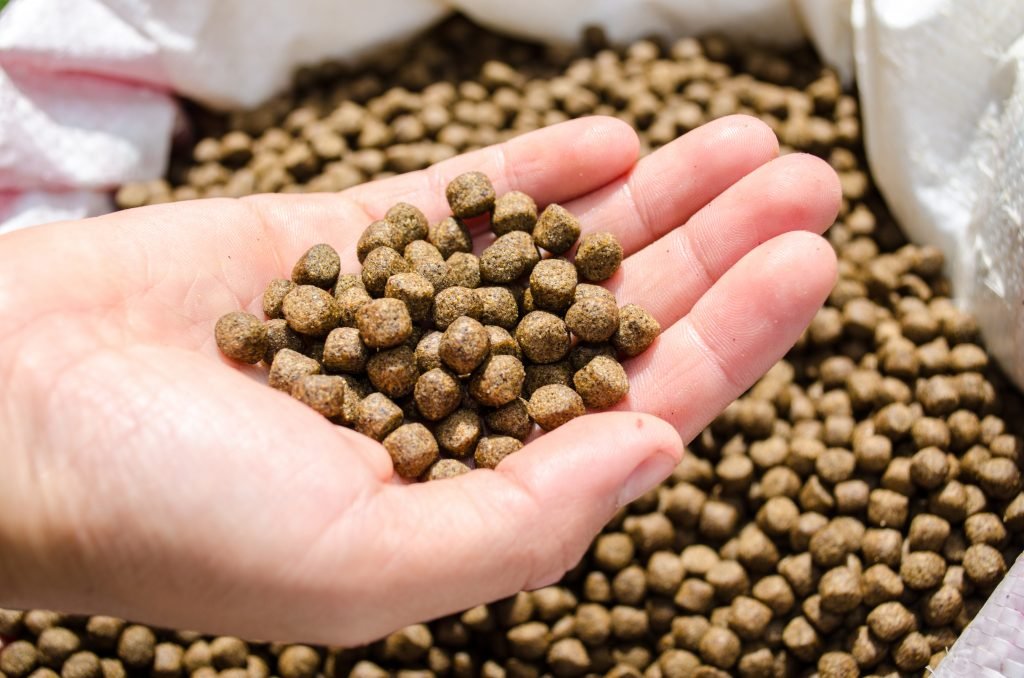
Prawns are generally fed processed aquatic feed rather than dry mash because pellets are easier to handle and distribute.
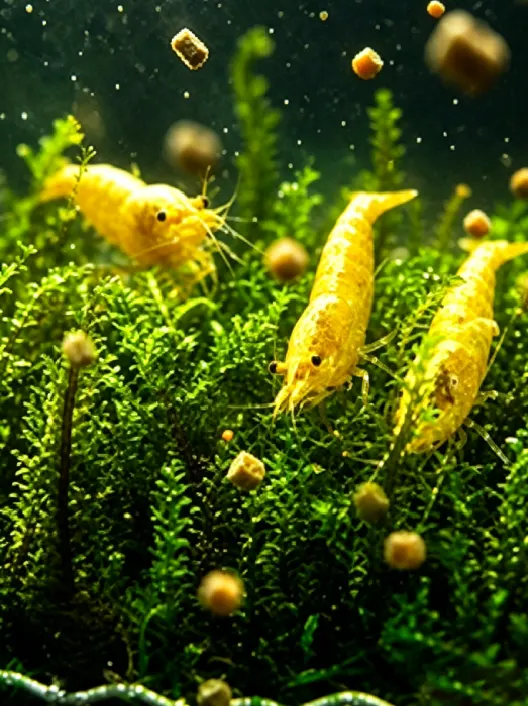
Pellets can also be designed to provide appropriate water stability. This is particularly important because feed that breaks apart too quickly can increase nutrient losses and contribute to poor water quality.
On the other hand, pellets that are excessively hard or dense may not be consumed efficiently.
Therefore, pellet quality should be considered from the perspective of feeding behavior rather than simply mechanical strength. The ideal characteristics depend on species, pellet size, feeding method, water temperature, and culture conditions.
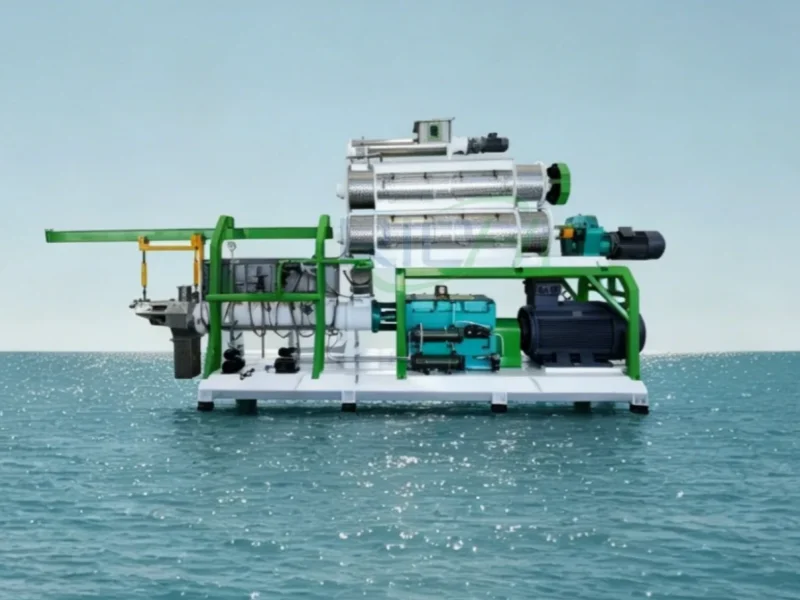
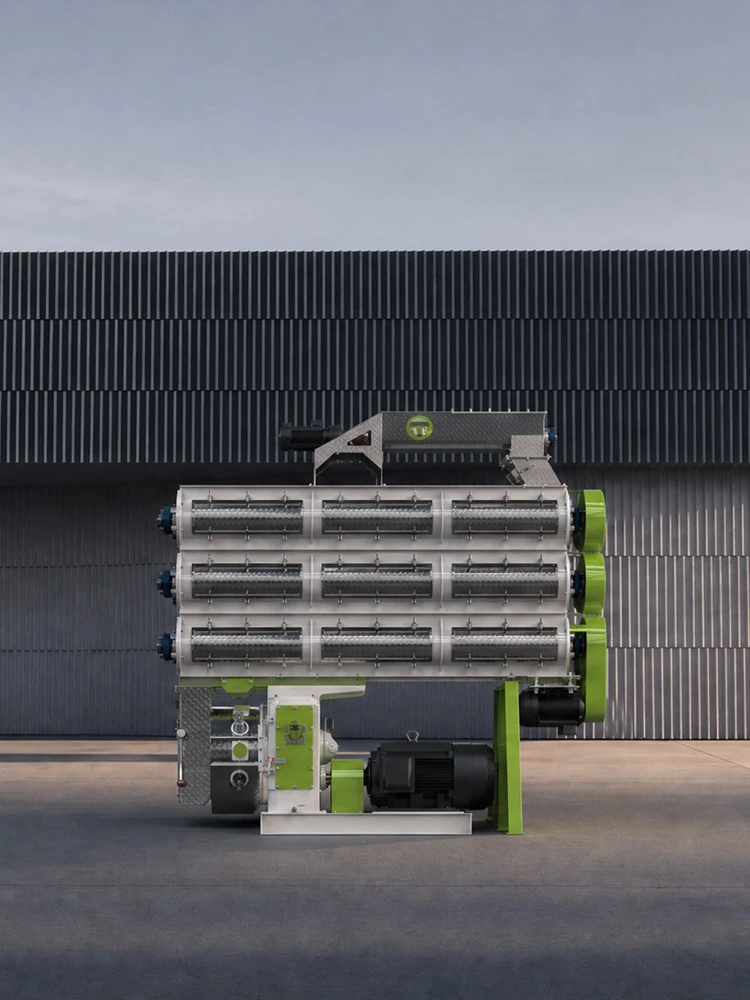
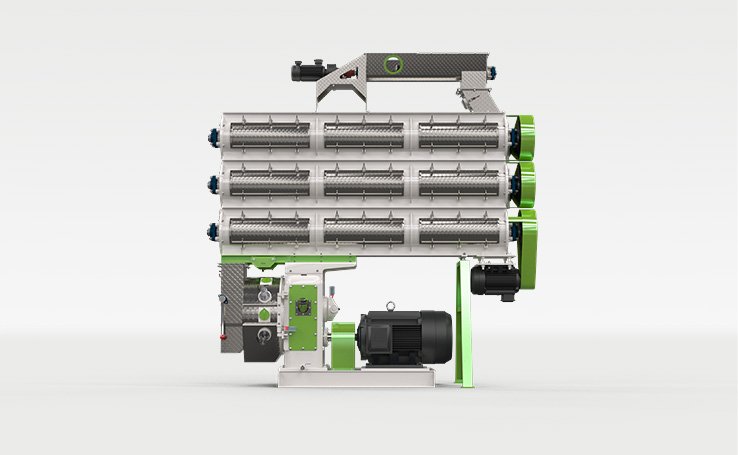
A well-designed prawn feed making machine needs to work consistently with the selected formulation and target pellet specifications rather than being evaluated only by its nominal output.
What Is the Difference Between Shrimp and Prawn Feed?
The terms shrimp and prawn are sometimes used differently depending on region and species, but from a feed-production perspective, the important factor is the biological and nutritional requirement of the cultured species.
Different species can have different feeding habits, digestive characteristics, and nutritional requirements. Even within the same species, feed requirements can change significantly between nursery, juvenile, grow-out, and broodstock stages.
Feed size is one obvious difference. Early-stage animals require much smaller particles, while larger prawns can consume larger pellets.
Water stability can also vary according to feeding conditions. Feed used in ponds may require different characteristics from feed used in tanks or other controlled systems.
Consequently, a feed plant should ideally be capable of producing different pellet specifications when multiple growth stages are involved.
How Does the Aquatic Feed Production Process Work?
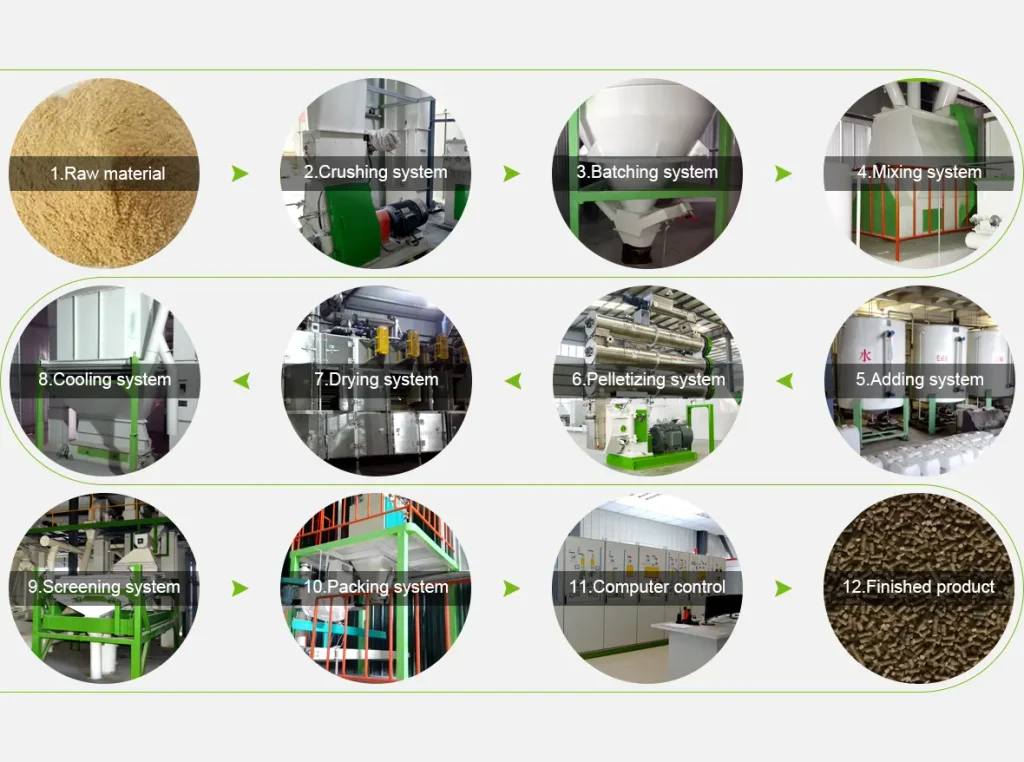
Although specific configurations vary, a typical aquatic feed production process can include raw material receiving, cleaning, grinding, batching, mixing, conditioning, extrusion or pelleting, drying or cooling, screening, and packaging.
The first stage is raw material preparation. Foreign materials should be removed before ingredients enter the main processing equipment.
Grinding follows, reducing ingredients to a suitable particle size. The ground ingredients are then accurately weighed and mixed.
Depending on the type of feed being produced, the mixture may be processed through a conventional pellet mill or an extruder. Extrusion can provide greater control over feed density and water stability for certain aquatic feed applications.
After forming, the feed may require drying and cooling to achieve a suitable moisture level before packaging.
Each stage affects the next. For example, poor grinding can reduce mixing uniformity, while inconsistent moisture can make forming and drying more difficult.
Should Prawn Feed Be Extruded or Pelleted?
There is no single answer for every prawn feed formulation. Both extrusion and conventional pelleting have applications in aquatic feed production.
Extrusion uses heat, moisture, pressure, and mechanical shear to transform the feed mixture. It can produce floating, slow-sinking, or other specially controlled feed characteristics depending on process conditions.
Conventional pelleting compresses conditioned feed through a die. It is widely used for sinking feeds and can provide a relatively straightforward production process.
The choice depends on the desired feed behavior, formulation, production scale, investment level, and technical requirements.
For farms producing feed mainly for bottom-feeding prawns, sinking pellets may be sufficient. Where more advanced buoyancy or density control is needed, extrusion may provide additional processing flexibility.
What Capacity Is Suitable for a Small Prawn Farm?
Production capacity should be based on actual feed consumption rather than simply selecting the largest machine available.
A small farm may only need several hundred kilograms of feed per day, while a commercial aquaculture operation can require several tons.
For example, a 500kg/h shrimp feed mill production line can be suitable for certain small and medium-scale operations when the daily feed requirement and planned working hours match this capacity.
Capacity calculations should consider actual operating time, not just theoretical machine output. If a machine produces 500 kg per hour under ideal conditions, eight hours of continuous operation would theoretically produce 4 tons. Real production may be lower because of startup, cleaning, formulation changes, maintenance, and other interruptions.
It is therefore useful to calculate average daily demand first and then determine the required hourly capacity.
How Can Water Stability Be Improved?
Water stability is one of the defining characteristics of aquatic feed.
When pellets enter the water, they should remain intact long enough for prawns to consume them. If they disintegrate immediately, nutrients may disperse into the water. This can increase feed waste and potentially contribute to water-quality problems.
Several factors affect water stability. These include ingredient composition, starch content, binder selection, particle size, conditioning conditions, pellet density, drying, and cooling.
Starch gelatinization can improve the binding characteristics of some formulas. However, excessive processing temperature may negatively affect certain heat-sensitive nutrients.
The goal is therefore to find a suitable balance between mechanical durability, water stability, nutrient preservation, and feeding behavior.
Does Moisture Affect Aquatic Feed Production?
Moisture has an influence at almost every stage of feed production.
Raw materials with excessive moisture can be more difficult to store and may require additional drying. During processing, moisture affects grinding, mixing, conditioning, extrusion, and pelleting.
After forming, the feed generally needs to reach an appropriate moisture level before packaging. If the final moisture content is too high, storage stability can be reduced.
Drying conditions should therefore be carefully controlled. Excessive drying may increase energy consumption and potentially affect product quality, while insufficient drying can create storage risks.
Operators should use appropriate moisture measurement rather than judging the finished product only by appearance.
What Equipment Is Needed for a Small Feed Plant?
A small aquatic feed plant does not necessarily need a highly complex configuration.
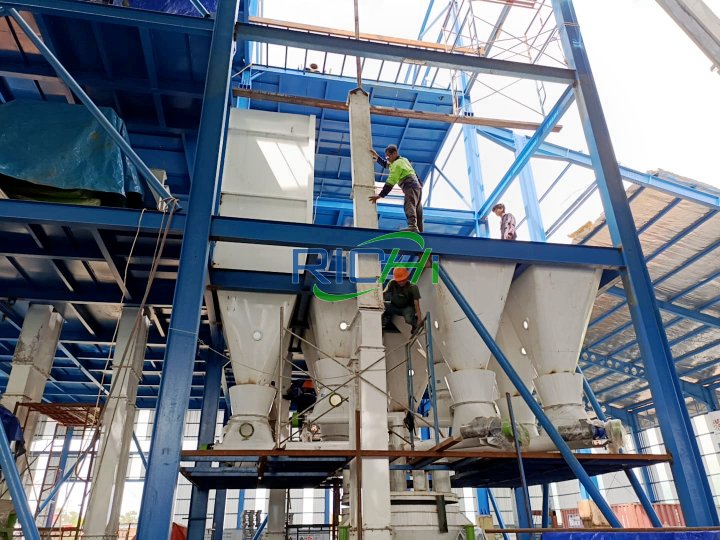
A basic system may include a hammer mill or other grinder, batching equipment, a mixer, pellet mill or extruder, dryer or cooler, screening equipment, conveyor systems, and packaging equipment.
The equipment configuration should correspond to the formulation and final product.
For example, a sinking prawn feed line may require different equipment from a floating fish feed line. If the facility produces several feed sizes, additional screening or die changes may be required.
Automation can also be introduced gradually. Manual feeding and batching may be practical for very small operations, while larger facilities can benefit from automatic weighing and centralized control.
The most important principle is process coordination. A high-capacity pellet machine will not improve overall production if the mixer, grinder, cooler, or packaging equipment cannot keep up.
How Should Feed Pellet Size Be Selected?
Pellet diameter should correspond to the size and feeding behavior of the cultured prawns.
Very young animals require extremely small particles, while larger prawns can consume larger pellets. Producing one pellet size for every growth stage may therefore be inefficient.
Many commercial operations produce several feed sizes and change production according to the culture cycle.
Die selection plays an important role in conventional pelleting. The hole diameter, compression ratio, formulation, moisture, and machine settings all influence the final pellet.
Operators should also consider pellet length. Shorter pellets may be easier for smaller prawns to consume, while longer pellets may be appropriate for larger animals.
The objective is to create a pellet that is easy for the target animals to locate, consume, and digest.
How Important Is Feed Storage?
Even high-quality feed can lose its value if it is stored incorrectly.
Finished feed should generally be protected from excessive humidity, direct sunlight, pests, and contamination. Storage areas should be clean, dry, and well ventilated.
Bags should be kept away from direct contact with wet floors or walls. Proper stock rotation can also prevent older feed from remaining in storage for too long.
Temperature is another consideration. High temperatures can accelerate oxidation of fats and reduce storage stability.
For this reason, feed production and feed storage should be treated as connected parts of the same quality-control system.
What Quality Tests Should Be Conducted?
Quality testing can involve both raw materials and finished feed.
Raw materials may be tested for moisture, protein, fat, fiber, ash, and other relevant parameters. Depending on the ingredient, additional tests may be appropriate.
Finished feed can be evaluated for pellet size, moisture, durability, density, water stability, and nutritional composition.
Physical appearance can provide useful clues, but it should not replace laboratory testing where accurate nutritional control is required.
Feed samples should also be retained when appropriate. If farmers later observe unusual feeding behavior or changes in water quality, retained samples can help with troubleshooting.
How Can Production Costs Be Controlled?
Feed production costs are influenced by much more than the purchase price of machinery.
Raw materials are usually one of the largest cost components. Energy consumption, labor, maintenance, packaging, storage losses, and feed waste also contribute to total production costs.
Formulation optimization can reduce unnecessary expenses while maintaining nutritional requirements. However, replacing an ingredient simply because it is cheaper may not reduce the overall cost if it lowers feed quality or processing efficiency.
Energy consumption should also be monitored. Grinding and extrusion can require significant power, especially at high production rates.
Regular maintenance can help prevent energy losses caused by worn components or inefficient operation.
How Often Should Feed Processing Equipment Be Maintained?
Regular maintenance helps keep production stable and reduces unexpected downtime.
Grinders should be checked for worn hammers and screens. Mixers need inspection for buildup and mechanical wear. Pellet mills require attention to dies, rollers, bearings, lubrication, and drive components.
Extruders require even more careful maintenance because they operate under heat, pressure, and mechanical load.
Cleaning should be included in routine maintenance. Residual feed can accumulate inside equipment and create contamination risks when switching between formulas.
Operators should establish daily, weekly, and monthly inspection routines based on equipment design and operating hours.
How Should a New Prawn Feed Line Be Planned?
A practical project normally starts with several basic questions:
- What prawn species will the feed be used for?
- How much feed is required per day?
- What feed sizes need to be produced?
- Will the product be sinking or floating?
- What raw materials are locally available?
- Will the facility produce one formula or several?
- How much automation is necessary?
- Is future expansion expected?
Answering these questions before selecting machinery can prevent many common design problems.
The workshop layout should also be considered early. Raw materials should move through the facility in a logical sequence, while finished products should have convenient access to packaging and storage areas.
Electrical supply, ventilation, dust control, water availability, drainage, and worker safety should also be included in the preliminary design.
Can a Small Feed Factory Be Expanded Later?
Yes, modular expansion is possible in many cases.
A small facility might initially focus on grinding, mixing, and pellet production. As production increases, automatic batching, additional storage bins, cooling systems, packaging equipment, or another processing unit can be added.
However, future expansion should be considered when designing the original workshop. Sufficient floor space, electrical capacity, material flow, and equipment foundations can make later expansion considerably easier.
It is usually more practical to reserve space for potential additions than to redesign the entire facility after production has already started.
What Should Buyers Ask Before Selecting Equipment?
Instead of asking only about machine capacity and price, buyers should ask technical questions related to their actual feed.
Important questions include:
- What raw materials will be processed?
- What moisture range can the machine handle?
- What pellet diameter is required?
- What is the expected actual production rate?
- What power consumption should be expected?
- What wearing parts need regular replacement?
- What maintenance procedures are required?
- Can the system handle multiple formulations?
- What type of cooling or drying is necessary?
- How can the system be expanded in the future?
These questions provide a much clearer basis for comparison than simply looking at equipment appearance or advertised capacity.
For readers who want to explore related feed-processing topics, continue reading can lead to additional discussions about aquatic feed formulation, extrusion technology, pellet quality, and production-line design.
What Role Does Technical Experience Play?
Aquatic feed processing involves many variables, and practical experience can be valuable when adapting equipment to different formulations.
A machine that performs well with one formula may require different operating parameters when the formulation changes. Raw material moisture, starch level, fiber content, oil addition, and pellet size can all influence processing behavior.
Technical support is therefore useful during commissioning and adjustment. Operators can learn how to identify common issues such as excessive fines, poor water stability, uneven pellet size, overheating, or unstable output.
Companies involved in feed-processing equipment, such as pellet making machine, may provide technical information related to feed machinery configuration and production-line design.
Nevertheless, equipment selection should remain based on measurable production requirements. A technically appropriate system is one that matches the actual feed formula, production capacity, raw materials, and operating conditions.
Final Thoughts
Producing high-quality prawn feed is a combination of nutrition, mechanical processing, and quality control. The process begins with appropriate raw materials and a scientifically designed formulation, then continues through grinding, batching, mixing, pelleting or extrusion, drying, cooling, screening, and storage.
There is no single production configuration suitable for every aquaculture operation. A small farm may need only a compact system, while a commercial producer may require automated batching, advanced extrusion, multiple pellet sizes, and integrated storage and packaging.
The most practical approach is to determine the nutritional and production requirements first and then select equipment around those needs. By understanding how formulation, particle size, moisture, processing conditions, and water stability interact, producers can build a more consistent feed production process while reducing avoidable waste and operating problems.