

A growing goat farm often reaches a point where manually preparing feed is no longer practical. As herd numbers increase, farmers need a more consistent way to process grass, hay, alfalfa, grains, and other feed ingredients. A pellet production system can make daily feeding easier while providing better control over the physical form of the feed.
A goat feed pellet machine for alfalfa can be particularly useful for farms that have access to their own forage resources. However, when a project targets approximately 2 tons of finished feed per hour, the planning requirements become more complicated than those of a small farm machine. The pellet mill is only one part of the system. Grinding, mixing, conveying, cooling, screening, storage, and packaging must also be considered.
The key question is therefore not simply whether a 2 ton per hour machine is available, but whether this capacity matches the farm’s actual production requirements.
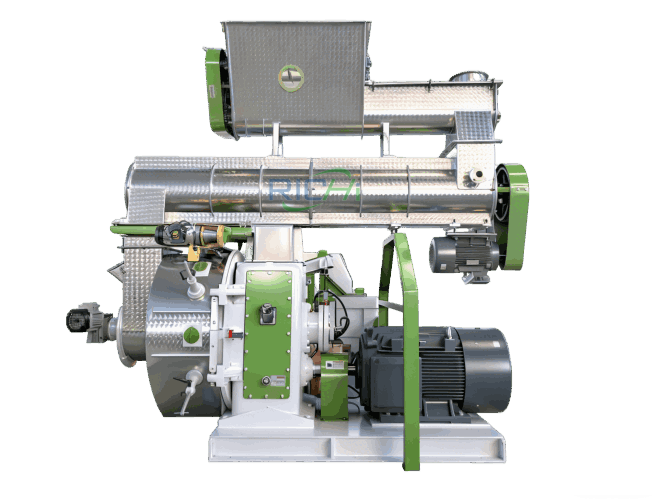
What Does 2 Tons Per Hour Mean?
A rated capacity of 2 tons per hour means the equipment is designed to produce approximately 2 metric tons of pellets under specified operating conditions.
However, this should not automatically be interpreted as 2 tons of finished product every hour under every formulation.
Actual output can be affected by raw material characteristics, moisture, particle size, fiber content, pellet diameter, die specifications, and feeding stability.
For example, a formula containing a high proportion of finely ground grains may behave differently from one containing large quantities of fibrous hay or grass.
This is why buyers should provide their actual raw materials and target pellet specifications when requesting equipment recommendations.
How Much Feed Can a Farm Produce Daily?
A 2 ton per hour system can theoretically produce 16 tons during an eight-hour operating shift.
In practice, effective production time is usually lower because the factory needs time for startup, shutdown, cleaning, maintenance, formula changes, and other operations.
Therefore, a farm should calculate its real daily requirement before selecting the equipment.
If the farm only needs 5 or 6 tons of feed per day, operating a 2 ton per hour system for several hours may be sufficient.
If the farm needs 15 tons or more every day, the capacity may be much more appropriate.
This calculation also helps determine whether a complete automated line is justified.
What Raw Materials Can Be Used?
Goat feed pellets can be made from a wide variety of agricultural materials.
Common forage ingredients include alfalfa, grass, hay, clover, corn stalks, wheat straw, and other crop residues. Concentrated ingredients may include corn, soybean meal, wheat bran, rice bran, and other protein or energy sources.
Minerals, vitamins, salt, and other additives can also be incorporated according to the feed formulation.
The ratio of forage to concentrate has an important influence on processing.
A high-fiber formula generally requires more attention to grinding and feeding. Grain-rich formulations may flow more easily through the equipment.
If a farm uses seasonal materials, the equipment should also be capable of handling changes in moisture and physical characteristics.
Why Does Alfalfa Require Proper Preparation?
Alfalfa is a valuable forage ingredient for goat feed, but its physical condition can vary considerably.
Freshly harvested alfalfa contains more moisture than dried alfalfa. Dried hay may contain long stems that are difficult to feed directly into a pellet mill.
Before pelletizing, long forage is generally cut or crushed into a more manageable size.
A hammer mill can then further reduce particle size where necessary.
The objective is not simply to make the material as fine as possible. Excessive grinding can increase energy consumption without providing additional benefits.
The appropriate particle size should be selected according to the feed formulation and pellet specifications.
Does a 2 Ton Per Hour System Need a Mixer?
For a complete commercial feed production system, a mixer is usually an important component.
The mixer combines forage, grains, protein ingredients, minerals, and other components into a homogeneous mixture.
Uniform mixing is particularly important when the formula contains small quantities of additives.
Mixer capacity should be matched with the pelletizing section.
If the mixer is too small, the pellet mill may frequently wait for another batch. If the mixer is too large, the equipment may be unnecessarily expensive for the actual production requirement.
For continuous high-output projects, automatic batching and feeding can further improve material flow.
How Does the Pellet Mill Form the Feed?
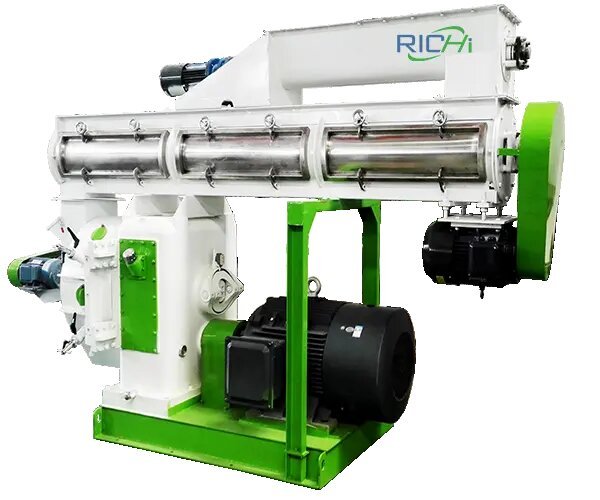
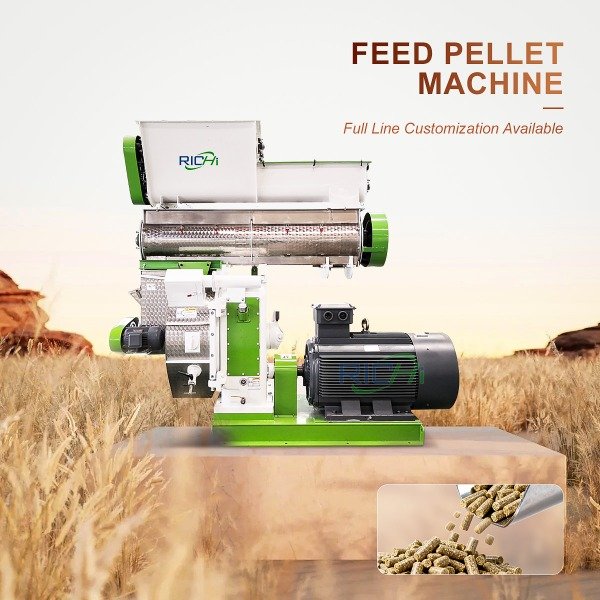
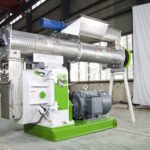
After grinding and mixing, the prepared material enters the pellet mill.
The machine feeds the material between rollers and a die. Pressure compresses the mixture through the die holes, producing continuous strands of compressed feed.
A cutter then divides these strands into individual pellets.
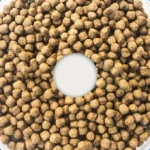
The die determines the approximate pellet diameter, while cutter adjustment influences pellet length.
For goat feed, pellet diameter should be selected according to animal age, feed formula, and feeding method.
If the factory plans to produce several pellet sizes, additional dies may be required.
Can the Same Machine Produce Different Goat Feed?
In many cases, one pellet mill can process several formulas.
For example, the same production system may be used for an alfalfa-rich ration, a grass-based formula, or a mixed concentrate feed.
However, each formulation can have different compression characteristics.
Changes in fiber, starch, moisture, oil, and particle size can affect pellet formation.
The operator may therefore need to adjust the feeding rate, conditioning, or other operating parameters when changing formulas.
Proper cleaning between formulas is also important, particularly when the factory produces feed for different animal groups.
Is Cooling Necessary After Pelletizing?
Fresh pellets leave the pellet mill at a relatively high temperature.
A cooler helps remove heat and stabilize the pellets before they enter storage or packaging.
This becomes increasingly important as production capacity increases.
A 2 ton per hour pellet mill producing several tons of feed per day requires a downstream cooling system that can keep pace with the pellet mill.
If the cooler is too small, finished pellets may accumulate and force the pellet mill to slow down or stop.
The same principle applies to screening and conveying equipment.
A production line should therefore be designed around balanced capacities rather than focusing on the pellet mill alone.
What Does a Complete Production Line Include?
A typical goat feed production line can include:
- Raw material receiving system
- Cleaning equipment
- Hammer mill or crusher
- Automatic batching system
- Feed mixer
- Pellet mill
- Cooler
- Screener
- Conveying equipment
- Packaging system
The actual configuration depends on the project.
A farm that already has prepared forage may not need extensive grinding equipment. Another farm processing whole crop residues may require a more substantial preprocessing section.
Similarly, a farm using feed internally may not need an automatic packaging machine.
How Important Is the Feeding System?
Stable feeding is especially important when processing fibrous materials.
Hay, grass, and straw can have poor flowability compared with finely ground grains. If the material enters the pellet mill unevenly, output and pellet quality can fluctuate.
A suitable feeder helps maintain consistent material flow.
For a 2 ton per hour project, the feeding system should be sized according to the expected production rate.
This is one reason why buyers should evaluate the complete machine configuration rather than purchasing a pellet mill based solely on motor power.
What About Electricity Consumption?
Electricity consumption is another important consideration for a larger farm-scale project.
The pellet mill is usually one of the major power consumers, but the total electrical load also includes the hammer mill, mixer, conveyors, cooler, screener, packaging equipment, and other auxiliary machines.
The farm should therefore evaluate total installed power.
Operating cost should be calculated based on actual production rather than motor power alone.
A larger machine can produce more feed in less time, but it may not be economical if its capacity is rarely utilized.
The best configuration balances production demand, equipment investment, labor, and energy consumption.
How Can a Farm Improve Pellet Quality?
Good pellet quality starts with proper raw material preparation.
Materials should be sufficiently clean and reduced to a suitable particle size. Ingredients should then be mixed uniformly before entering the pelletizing section.
Moisture should also be controlled.
During production, stable feeding and appropriate die selection help maintain consistent pellet formation.
After pelletizing, cooling and screening improve the physical quality of the finished product.
Storage conditions should not be overlooked. Finished feed should be kept in a dry environment and protected from excessive moisture.
Regular inspection of pellet appearance, durability, temperature, and moisture can help operators identify problems early.
Is 2 Tons Per Hour Too Large for a Small Farm?
It depends on the farm’s growth plan.
For a small farm with only a limited number of goats, a 2 ton per hour machine may be unnecessarily large.
However, if the farm plans to expand its herd, supply neighboring farms, or begin selling commercial feed, the additional capacity may become useful.
A phased investment can also be considered.
The factory can initially operate the pelletizing system for fewer hours each day and increase operating time as feed demand grows.
This approach can provide flexibility without requiring immediate expansion.
What Equipment Can Be Added Later?
A well-designed factory can be expanded as production increases.
Additional storage bins can be installed for raw materials. Automatic batching can be added to improve weighing accuracy. A larger mixer can increase batch capacity.
Additional pellet mills can also be integrated when demand exceeds the output of the original system.
Packaging automation can be introduced when the farm begins selling larger quantities of feed.
This makes the initial factory layout particularly important.
Space should be reserved around the main production equipment so future additions do not interfere with existing material flow.
Can a Small Goat Feed Production Line Be Expanded?
For farms that are still growing, starting with a compact system can reduce the initial investment while leaving room for future expansion. A small cattle feed production line can handle essential processes such as crushing, mixing, pelletizing, cooling, and screening in a relatively compact layout. As herd size and feed demand increase, the farm can add larger storage bins, automatic batching, additional pelletizing equipment, or upgraded packaging systems. This modular approach allows the production capacity to grow according to actual demand instead of requiring a large investment from the beginning.
Should Buyers Compare Different Suppliers?
Yes.
Different manufacturers may use different assumptions when calculating production capacity.
Buyers should ask suppliers to specify the raw material, moisture content, pellet diameter, and other conditions used for the quoted output.
They should also request information about the die, rollers, motor, feeder, bearings, control system, cooler, screener, and other components.
A reliable Richi Pellet Machine supplier can help evaluate these factors and develop a complete equipment configuration according to the customer’s actual production requirements.
Instead of comparing only the price of one machine, buyers should compare the complete production solution and its expected operating conditions.
How Can a 2 Ton Line Reduce Labor?
Manual feed preparation can involve repeated weighing, carrying, mixing, and bagging.
A properly designed production line can automate much of this material handling.
Automatic batching reduces manual weighing. Mechanical conveyors reduce material transportation. A continuous cooling and screening system reduces manual handling after pelletizing.
Automatic packaging can further reduce labor when finished feed is sold commercially.
For farms with high daily feed demand, these improvements can have a significant effect on overall operating efficiency.
What Should Be Prepared Before Ordering?
Before requesting a quotation, the farm should prepare detailed project information.
This includes the main raw materials, approximate formula, moisture range, desired pellet diameter, expected daily output, available working hours, electricity conditions, factory dimensions, and packaging requirements.
If the farm intends to process both forage and concentrate feed, this should also be clearly stated.
Photos or samples of the raw materials can be useful because physical characteristics are often difficult to determine from ingredient names alone.
The more accurate the project information, the easier it is to design a balanced production line.
For additional information about equipment configuration, find out here now and compare different livestock feed processing approaches before making a purchasing decision.
Final Thoughts
A 2 ton per hour goat feed pellet system can be a practical choice for medium-sized and growing farms, but the appropriate capacity depends on actual feed demand.
Raw material type, fiber content, moisture, pellet diameter, grinding requirements, mixing efficiency, cooling, screening, and packaging all influence the real production capacity.
The goal should not be to purchase the largest available machine. Instead, the production line should provide enough capacity for current requirements while allowing reasonable future expansion.
With proper planning, a 2 ton per hour system can provide a stable method for converting forage and concentrated ingredients into uniform goat feed pellets. By balancing the pellet mill with the supporting equipment, farms can improve production efficiency, reduce manual handling, and establish a more reliable feed supply.
Related post:https://pelletizerequipment.com/livestock-feed-pellet-machine/