



Small Does Not Always Mean Simple
Entering the cat litter business does not necessarily require a huge factory.
A small or medium-sized manufacturer can build a focused operation around one raw material, one product category or one regional market. The key is to avoid copying the production strategy of a large multinational manufacturer.
Large companies often operate with extensive product portfolios, automated logistics networks and large distribution systems. A smaller business can instead compete through specialization, local raw-material access, flexible production and shorter supply chains.
For such businesses, selecting the right cat litter making machine is closely connected to the overall business model.
Start With the Raw Material You Can Control
The best starting point for a small manufacturer may be the material already available nearby.
Potential sources include:
- Sawmill residues
- Furniture-factory sawdust
- Agricultural fibers
- Tofu or soybean residues
- Recycled paper
- Corn-based materials
- Mineral materials such as bentonite
Each material requires a different approach.
Wood-based materials may require crushing and drying. Plant-based materials may require mixing with binders or other ingredients. Mineral cat litter may require a completely different preparation strategy.
(Related Post:https://www.richipelletmill.com/cat-litter-pellet-machine/)
This is why a small factory should avoid purchasing equipment before defining its raw-material formula.
A Focused Product Strategy Can Reduce Complexity
Instead of trying to manufacture every type of cat litter, a new producer may begin with one clearly defined product.
For example:
Wood-processing company → wood-based cat litter
or
Food-processing company → plant-based cat litter
This strategy simplifies raw-material procurement, production management and marketing.
Once the production process becomes stable, additional products can be considered.
A factory that starts with five different formulas may face unnecessary complexity in inventory, quality control and packaging.
Why Production Capacity Should Be Carefully Selected
Small businesses often ask how many tons per hour they should produce.
The answer depends on the expected sales volume rather than the size of the workshop.
Suppose a manufacturer has enough demand for 8 tons of finished litter per day. Installing equipment designed for dramatically higher production may create unnecessary capital costs and underutilization.
On the other hand, if the company already has long-term customers and abundant raw material, a larger system may be justified.
A simple capacity calculation should consider:
Daily demand ÷ planned operating hours = approximate hourly production requirement
The result should then be adjusted for downtime, maintenance and seasonal fluctuations.
Drying Can Become the Hidden Bottleneck
Many people focus heavily on the pelletizing machine because it visibly creates the product.
However, drying can become a critical bottleneck.
If wet material enters a pelletizing process without adequate moisture control, pellet quality may become inconsistent. If freshly formed pellets require drying, the drying section must also have enough capacity to handle the continuous output of the pelletizing equipment.
For certain applications, a 1-4T/H belt dryer machine for sale can be evaluated as part of a compact drying system.
Belt drying can be attractive for products that benefit from controlled continuous airflow and gradual moisture removal. However, the correct drying technology depends on material properties, initial moisture, target moisture and available heat sources.
What Does a Compact Production Line Look Like?
A compact cat litter operation does not necessarily need every possible machine.
For a simple wood-based product, the process could involve:
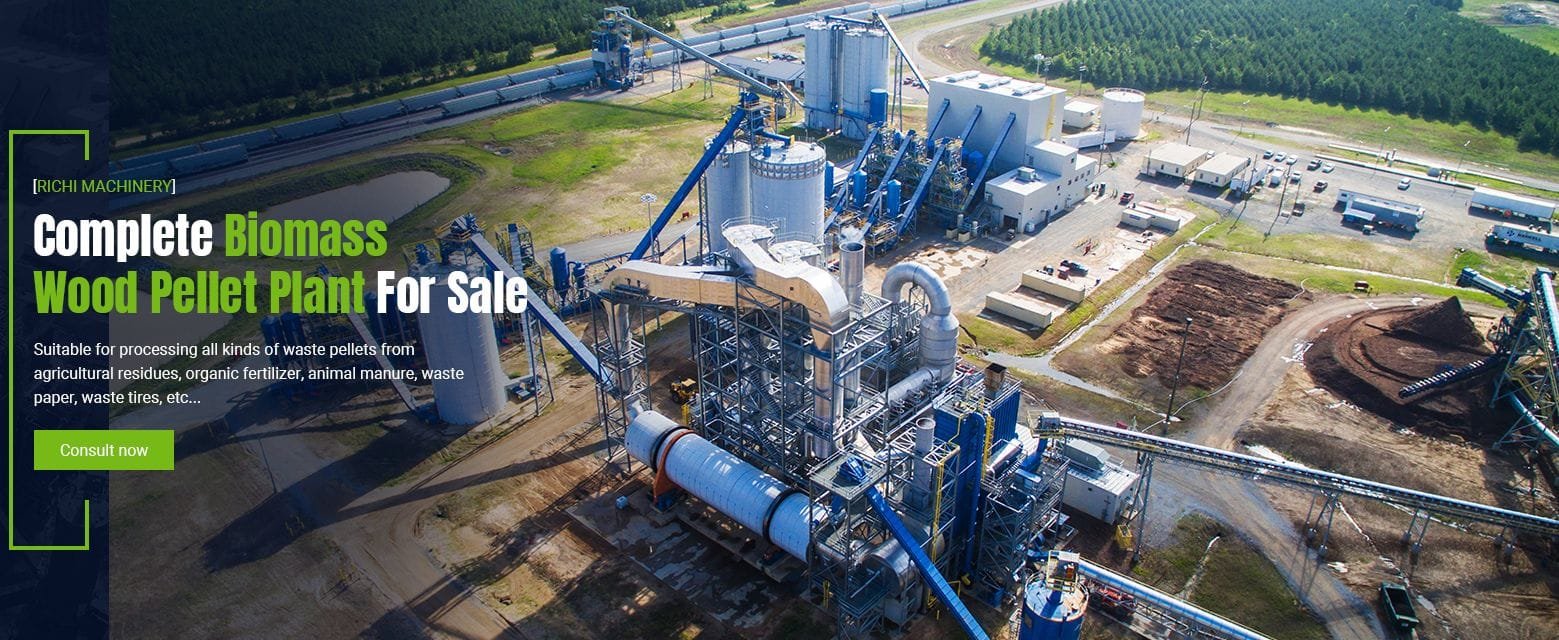
Raw material → crushing → drying → pelletizing → cooling → screening → packaging
If the raw material already has the correct particle size and moisture, some preparation steps may be reduced.
If additives are required, a mixing section can be introduced.
If the product requires special shaping, additional equipment may be necessary.
This modular approach allows the production line to be designed around the actual product rather than around a fixed equipment list.
Automation Should Solve a Problem
Automation is useful, but automation should not be purchased simply because it sounds advanced.
A small factory should identify where automation creates measurable value.
Examples include:
- Automatic weighing
- Automatic batching
- Continuous feeding
- Automatic temperature control
- Automatic pellet screening
- Automatic packaging
- Production data monitoring
If labor is inexpensive and production volume is small, manual operation may still be practical in certain areas.
As production increases, automation can gradually be introduced.
This creates a more realistic path for small manufacturers than trying to build a fully automated factory immediately.
How Does Product Quality Affect Repeat Sales?
Cat litter is a consumable product.
Customers do not purchase it only once. If the product performs consistently, repeat purchases can become an important part of the business.
For this reason, consistency can matter as much as maximum production output.
Manufacturers should monitor:
- Particle size
- Dust level
- Moisture
- Pellet strength
- Absorption
- Odor-control formulation
- Packaging weight
A production line should therefore be designed not only for output but also for repeatable quality.
Why Screening Deserves More Attention
Screening is often overlooked because it does not create the pellets.
Yet it determines which particles finally reach the package.
After pelletizing, a batch can contain:
- Properly formed pellets
- Broken pellets
- Fine powder
- Oversized material
A screening system separates these fractions.
The rejected material may potentially be returned to the process depending on the product and process design.
The result is a more consistent finished product and better control over the amount of fines entering the packaging stage.
Could a Small Factory Use Existing Equipment?
This is an important question for companies that already have a biomass or wood-processing operation.
Some businesses may already own:
- Chippers
- Hammer mills
- Dryers
- Conveyors
- Storage silos
- Dust collectors
In this situation, it may not be necessary to replace everything.
Instead, the company can examine which existing equipment is technically compatible with the intended cat litter process.
The new investment might focus on:
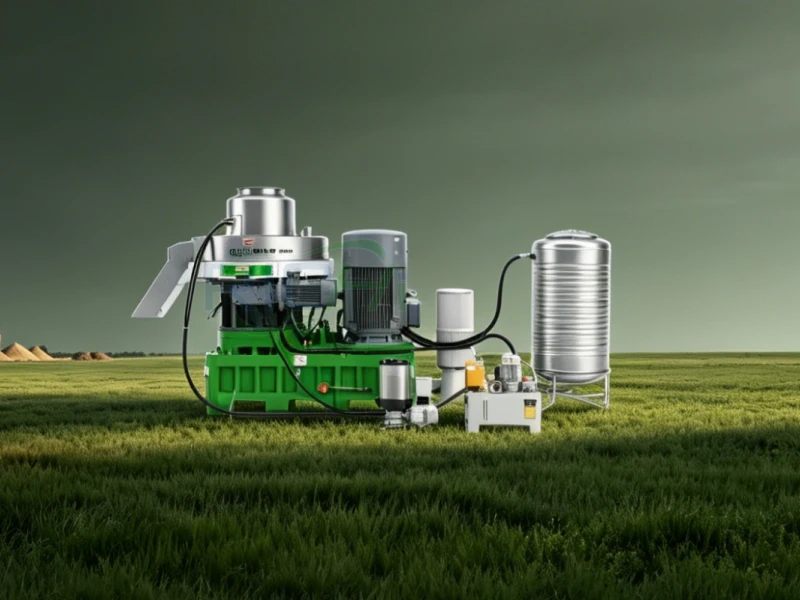
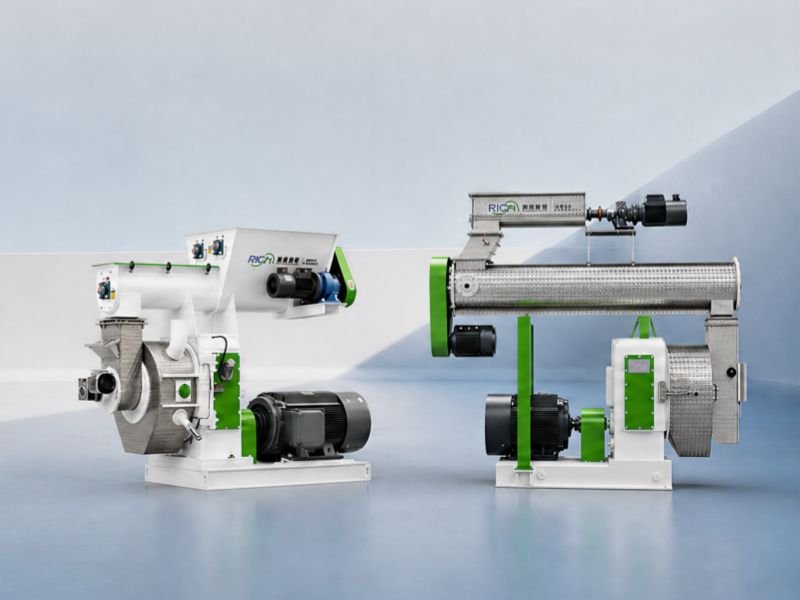
- Pelletizing
- Cooling
- Screening
- Mixing
- Packaging
This approach can reduce unnecessary duplication, although every existing machine should be checked for actual capacity and product compatibility.
The Role of Supplier Engineering
For a small investor, supplier engineering support can be more valuable than simply receiving a catalog.
The supplier should understand:
Raw material + moisture + particle size + capacity + pellet specification + packaging requirement
These variables should then be translated into an equipment configuration.
For example, a supplier may recommend different grinding or drying arrangements for sawdust than for wet plant fiber.
The objective is to create a process that works as a complete system.
A company such as Richi manufacture may therefore be evaluated not simply on individual equipment, but on its ability to connect individual machines into a practical production process.
What About Future Expansion?
A small factory should still think about expansion.
The production workshop can be designed with additional space for:
- A second pellet mill
- Larger storage
- Additional dryers
- Extra packaging machines
- New product lines
Electrical capacity and material flow should also leave room for expansion where practical.
This prevents the first production line from becoming a physical limitation when demand grows.
A Different Way to Think About Competition
A small cat litter company does not necessarily need to compete through volume.
It can compete through:
- Local raw materials
- Specialized formulas
- Regional distribution
- Flexible packaging
- Faster product development
- Niche products
- Private-label manufacturing
For example, a company close to a large furniture-manufacturing cluster may have an advantage in sourcing wood residues.
Another company near a food-processing area may have access to plant-based by-products.
The production strategy should reflect those local advantages.
The Most Important Investment May Be Process Knowledge
Equipment can be purchased.
Process knowledge has to be developed.
A new manufacturer should test its raw material before commercial production and understand how changes in moisture, particle size and formulation affect the finished product.
This reduces the risk of building a production line around assumptions.
It is also useful to compare several plant layouts and capacity scenarios before placing an order.
Manufacturers researching production technologies can look at this website for additional ideas before discussing a customized production plan.
The most sustainable small-scale strategy is usually not “build as big as possible.” It is “build what the market and raw material can support, then expand when the business proves itself.”