

For many agricultural businesses, the harvest season creates an unusual economic situation. Crops generate revenue, but they also generate large volumes of residual material. Stalks, straw, husks, and other fibrous by-products may have some local uses, yet a substantial portion can remain underutilized.
The growing interest in renewable heating and industrial fuel is creating a different perspective. Agricultural by-products can be collected, processed, densified, and sold as fuel products. What once looked like low-value material can become a commercial resource.
The opportunity is promising, but successful residue processing requires more than purchasing a machine and turning it on. The business model must begin with a realistic assessment of raw material supply, transportation, processing costs, product quality, and customer demand.
The Hidden Cost of Loose Biomass
Loose agricultural residues are difficult to manage because their bulk density is low.
A truck filled with loose straw may look full while carrying relatively little actual dry matter. Storage buildings become large, handling equipment becomes more complicated, and long-distance transport becomes increasingly expensive.
Pellets solve part of this logistical problem by increasing material density.
The transformation can be especially valuable in areas where large quantities of residues are concentrated around farming communities. Instead of transporting loose material over long distances, a centralized facility can process it near the source and ship a much more compact product.
This is one of the key reasons a corn stalk pelletizer can be attractive to agricultural enterprises seeking a more efficient way to handle seasonal biomass.
Revenue Starts with Raw Material Strategy
A residue pellet project is only as strong as its raw material supply.
Businesses often focus on machinery capacity before determining how much biomass they can secure. This approach can produce an impressive plant on paper but an underutilized operation in reality.
A better approach begins with a raw material survey.
The survey should examine:
- Annual residue volume
- Collection season
- Average moisture
- Storage losses
- Current disposal methods
- Existing transportation routes
- Competing uses
- Expected purchasing cost
A residue that appears abundant may not be economically available if it is already used by livestock farms or requires expensive transportation.
Wheat, Rice, Corn, and Sugar Residues
Diversification can make a project more resilient.
Wheat straw is abundant in many grain-producing regions. Rice straw may be available in significant quantities in areas with intensive rice cultivation. Corn stalks are common in maize-producing regions, while bagasse is associated with sugar processing.
These materials share some broad characteristics but differ substantially in structure and processing behavior.
For example, a buyer evaluating a 0.5-8 T/H wheat straw pellet machine for sale should not assume that the entire capacity range is equally suitable for every project. The practical output depends on feedstock condition, moisture, particle size, machine configuration, and operating conditions.
Capacity is therefore a starting point for engineering discussions, not the final business answer.
How a Residue Pellet Line Works
A typical system may include:
Raw material receiving → crushing → drying when necessary → pelletizing → cooling → screening → packing or bulk storage
Each stage has a specific purpose.
Crushing
Crushing creates a more uniform particle structure and improves feeding consistency. For fibrous residues, this stage can be particularly important because long strands may bridge or wrap around equipment.
Drying
Drying may be necessary when incoming biomass contains excessive moisture. The objective is to create a more suitable condition for compression and stable final-pellet storage.
Pelletizing
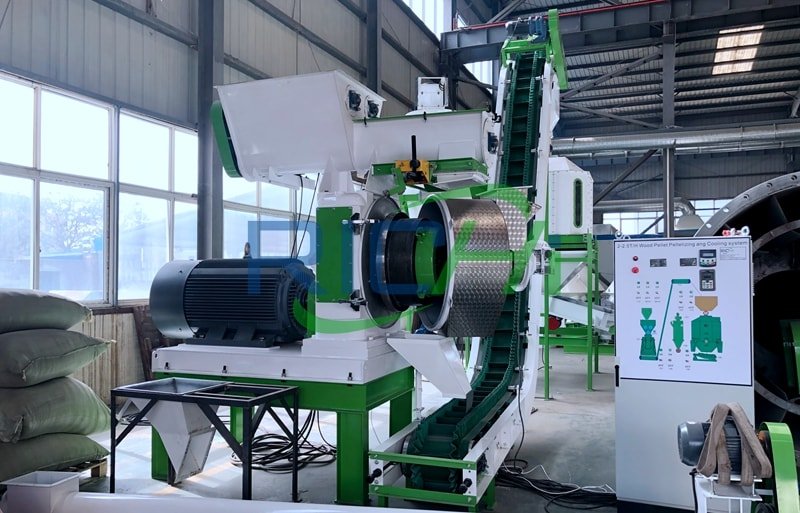
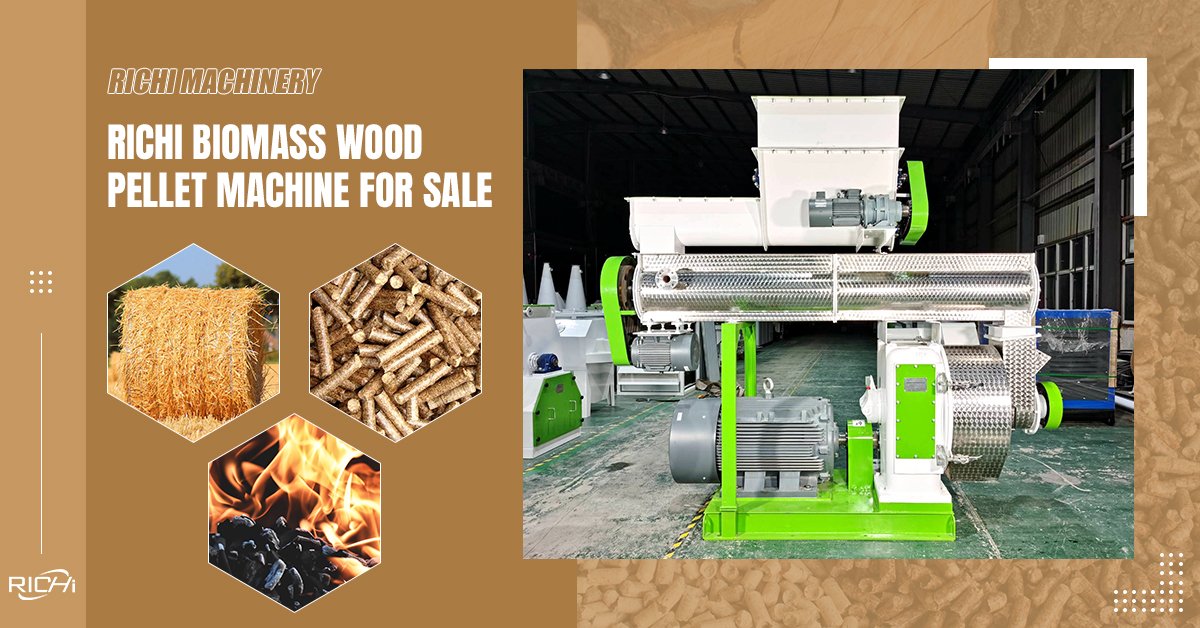
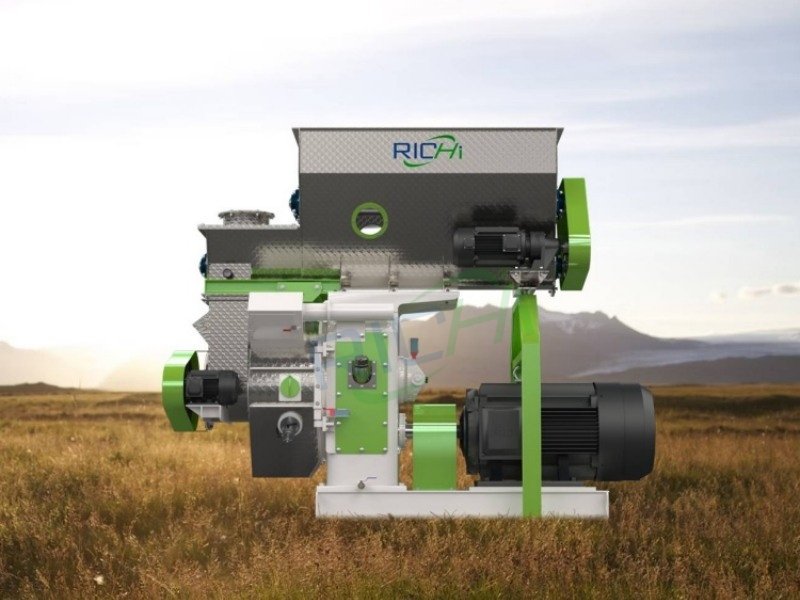
During compression, prepared biomass passes through a pelletizing chamber and is formed into compact cylindrical products.
Cooling
Freshly produced pellets can retain heat and moisture. Cooling helps stabilize the product before storage or packing.
Screening
Screening separates fines and undersized particles from the finished pellets. The recovered fines may potentially be returned to the process depending on the system design.
Packing
The final pellets may be packed into small bags, larger bulk bags, or moved directly into bulk storage.
Why Process Design Matters More Than Individual Machines
A residue-processing project should be viewed as a connected system.
A high-quality pellet mill cannot compensate for poor material preparation. A powerful dryer cannot solve an unstable feeding system. A large storage area cannot fix low pellet durability.
This is why complete system planning has become increasingly important in biomass projects.
A pellet plant may include multiple machines designed to work together rather than independent equipment selected solely by capacity.
For a small agricultural enterprise, that could mean a relatively simple line with basic feeding, crushing, pelletizing, cooling, and packing. For a commercial facility, the project might involve automated conveying, large drying systems, electrical control, dust management, weighing, and packaging systems.
Economics: Where Does the Money Come From?
There are several possible sources of economic value.
Selling the pellets
The most obvious model is to process residues into fuel and sell the final product.
Avoiding disposal costs
Some agricultural businesses already spend money moving or disposing of crop residues. Converting part of this material into saleable fuel can create additional value even before product revenue is considered.
Reducing purchased fuel
A farm, food-processing business, or industrial operation may produce its own biomass fuel and reduce dependence on fossil or externally purchased fuel.
Supplying nearby industries
Local boilers, grain dryers, food-processing facilities, and other heat users may provide stable demand for biomass fuel.
(Related Post: https://biomasspelletizer.com/straw-pellet-production-line/)
The strongest business model may combine several of these benefits.
Quality Is a Commercial Issue
Customers do not simply buy “biomass.” They buy a fuel product that must work with their equipment.
Pellet durability, moisture, ash content, diameter, and particle consistency can all influence usability.
Agricultural residues may contain more mineral matter than clean woody biomass, especially when soil, sand, or field debris are mixed into the feedstock. Proper collection and cleaning practices can therefore affect the final product.
A pellet producer should understand what the end user expects before deciding the production specification.
The Importance of Location
Location affects almost every part of the business.
Being close to farms reduces raw-material transportation costs. Being close to customers lowers finished-product logistics costs. Having reliable electricity reduces operational interruptions. Having sufficient land simplifies storage and future expansion.
A processing facility located between raw material and market can have an advantage over one that is convenient for only one side of the supply chain.
Seasonal Material Requires Annual Planning
Agricultural residues are not produced evenly throughout the year.
Harvest creates a large temporary supply, while demand for fuel may continue during all seasons. This creates the need for storage.
A good business model may therefore involve buying or collecting large quantities during the harvest window, preparing a portion, and keeping dry material available for later processing.
Storage losses must be included in financial planning. Moisture infiltration, biological degradation, contamination, and handling losses can reduce the quantity available for pellet production.
Scaling from a Small Project to a Commercial Facility
Not every project needs a large industrial line.
A small agricultural enterprise may begin with modest output and establish a local customer base before expanding. This approach can reduce capital risk and provide real operating experience.
As demand grows, the business can add:
- Larger feeding systems
- Improved drying capacity
- Automated conveying
- Additional pelletizing units
- Larger cooling and screening systems
- Automated packing
- Warehouse and bulk storage capacity
This staged approach can be more practical than investing heavily before demand has been verified.
A Different Way to Think About Agricultural Waste
The real transformation is not technological. It is economic.
A stalk left in a field has one type of value. A dried, uniform, durable pellet stored in a warehouse has another.
Processing creates a standardized product that can be measured, transported, stored, and sold.
This principle applies across different types of agricultural by-products. The feedstock may change, but the business logic remains similar: collect local low-density material, improve its physical characteristics, and connect the processed product with a customer willing to pay for convenience and usable energy.
Final Thoughts
Agricultural residue pelletization is not suitable for every farm or region. Its success depends heavily on feedstock availability, collection economics, technical design, and market demand.
However, when those conditions align, residue processing can create a useful bridge between agriculture and renewable energy.
Businesses considering equipment should evaluate the whole process instead of focusing only on hourly output. Technical guidance and case information can be valuable, especially when comparing feedstock types, machine configurations, and investment scales. Those looking to understand the wider subject can also read about this before making equipment decisions.
The future of agricultural residue management may not be about finding new resources. It may be about finding better ways to use the resources already being produced every year.