



A sawmill owner I met a few years ago had a problem that will sound familiar to anyone in the wood processing business. His yard was filling up with sawdust. Every day, the planers and saws produced more of it. Some was sold to local farms for bedding. Some was given away. Some was burned in an old boiler that was more trouble than it was worth. The rest just sat there, taking up space, creating dust, and occasionally catching fire. He was paying to manage a material that had energy locked inside it.
Then he visited a trade show and saw a pellet mill running. He watched sawdust go in one end and dense, uniform pellets come out the other. He asked the exhibitor a simple question: what would it take to do this at my own site? The answer changed the way he thought about his entire operation. It wasn’t just a machine he needed. It was a system. A complete wood pellet production line that could take his waste material and turn it into a product with real market value.
What a Complete Line Actually Includes
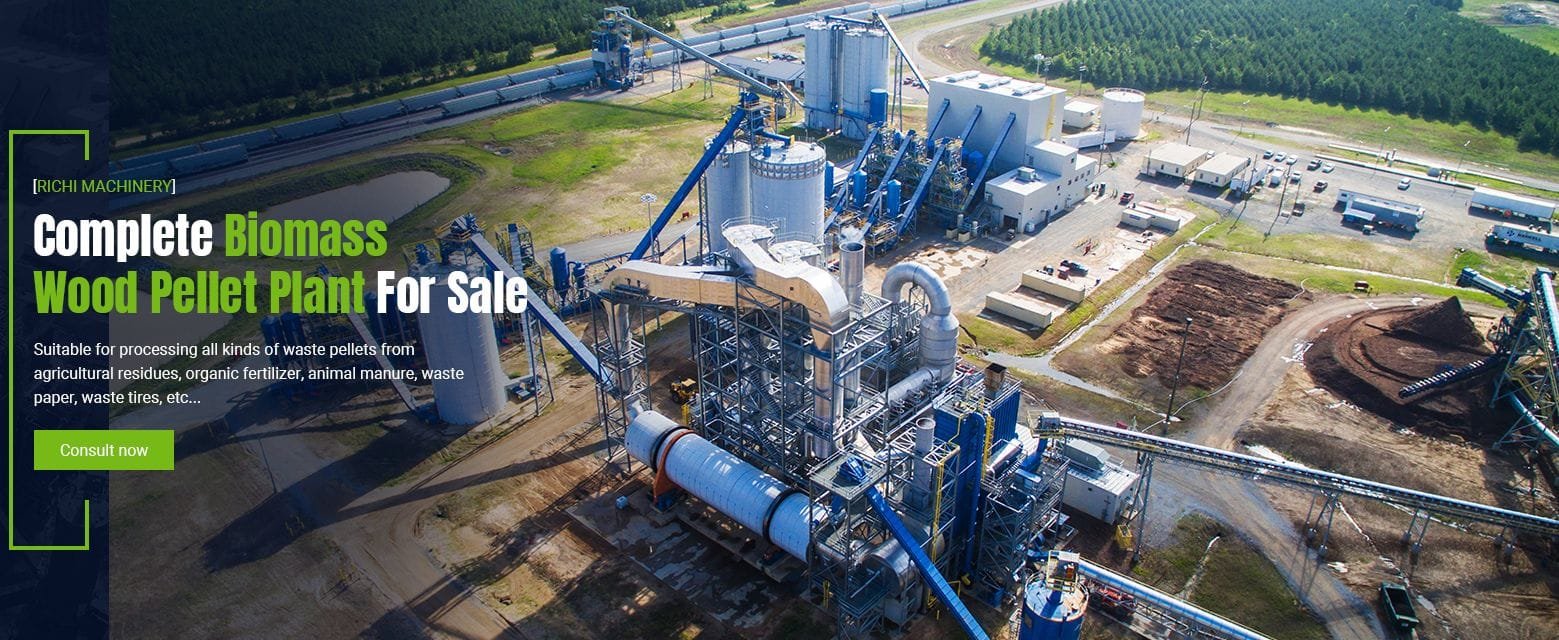
A pellet mill on its own is not a production line. It is one component. To turn raw sawdust into finished pellets, you need a sequence of machines that work together. Each one does a specific job. If any one of them is undersized or poorly matched to the others, the whole line suffers.
The process usually starts with size reduction. If your raw material comes in as chips, slabs, or large shavings, you need a chipper or a hammer mill to break it down. The goal is a consistent particle size. If the particles are too large, the pellet mill will struggle. If they are too fine, the pellets may be too dense.
Next comes drying. Most sawdust arrives with too much moisture. Fresh sawdust from green lumber can be 40% to 60% moisture. For pelleting, you need it around 10% to 12%. A rotary dryer or a belt dryer removes the excess water. Drying is the most energy-intensive step in the line, so the efficiency of the dryer has a big impact on operating costs.
After drying, the material goes through a second grinding stage if needed. Then it is mixed and conditioned. Conditioning adds steam to soften the fibers and activate the natural lignin, which acts as a binder during pelleting. The conditioned material then enters the pellet mill, where it is pressed through a die under high pressure. The friction generates heat, the lignin melts, and the pellets form.
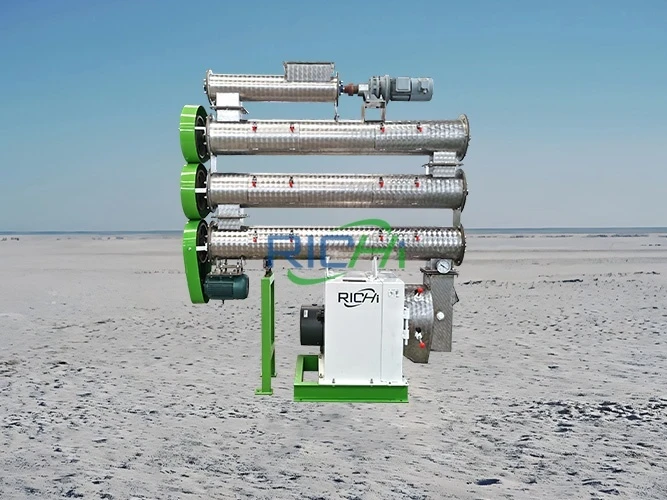
Once the pellets leave the mill, they are hot and soft. They need to be cooled. A counterflow cooler reduces the temperature and moisture content. After cooling, the pellets are screened to remove fines and broken pieces. The fines are recycled back into the process. The finished pellets are then stored in silos or bagged for sale.
That is a complete line. It is not just one machine. It is a coordinated system. And the way those components are sized and arranged determines how well the line performs.
Why Integration Matters More Than Any Single Machine
When people start shopping for equipment, they often focus on the pellet mill. It is the most visible and the most talked-about component. But the pellet mill is only as good as the material fed into it. If the grinder produces inconsistent particles, the pellets will be inconsistent. If the dryer leaves too much moisture, the pellets will be soft and crumbly. If the cooler is undersized, the pellets will sweat and mold in storage.
That is why experienced buyers look at the whole line, not just the mill. They ask about throughput matching. They ask about moisture control. They ask about how the line handles changes in raw material. A line that is properly integrated runs smoothly. A line that is not becomes a source of constant frustration.
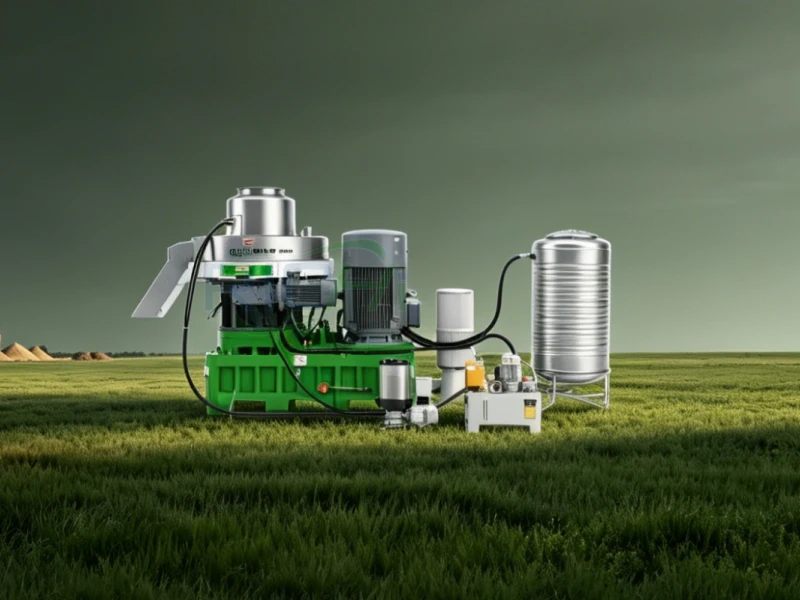
An industrial biomass pellet machine for sale is often the centerpiece of a larger project. But it should be selected based on the capacity of the entire line, not in isolation. The mill must match the dryer. The dryer must match the grinder. The cooler must match the mill. Every component has to be sized for the same target throughput.
Choosing the Right Scale
Not every operation needs the same size line. A small furniture shop might produce a few tons of sawdust per week. A large sawmill might produce hundreds of tons. The equipment must match the volume.
Small lines, producing a few hundred kilograms per hour, are suitable for workshops that want to process their own waste for on-site heating or small-scale sales. These lines are compact, affordable, and relatively simple to operate.
Mid-range lines, producing one to three tons per hour, are suitable for commercial operations that sell pellets to local markets. They offer a good balance between investment and output.
Large lines, producing five to ten tons per hour or more, are industrial-scale systems. They are used by pellet producers who supply power plants, export markets, or large distributors. These lines require significant capital, a reliable feedstock supply, and a well-developed market.
The right scale depends on three things: how much raw material you have, how much capital you can invest, and who will buy the pellets. Oversizing is a common mistake. It ties up capital and leaves equipment idle. Undersizing is also a mistake. It limits growth and forces you to run equipment beyond its design capacity.
What to Look For in Equipment
Not all pellet equipment is created equal. The differences show up in the details. The quality of the die. The precision of the rollers. The efficiency of the motor. The reliability of the control system. The availability of spare parts.
A pellet plant that is built with cheap components will cost less upfront but more over time. Dies wear out faster. Bearings fail. Belts break. The downtime and maintenance costs add up. A plant built with wear-resistant components and robust drives will cost more initially but will run reliably for years.
The die is especially important. Wood pellets are abrasive. The silica in the wood wears down the die. A die made from standard steel might last a few hundred hours. A die made from hardened alloy might last several thousand. The price difference is small compared to the cost of frequent replacements and lost production.
The control system also matters. A modern plant uses sensors to monitor temperature, pressure, moisture, and feed rate. The controls adjust parameters automatically to keep the process stable. This reduces labor and improves consistency. A manual system requires constant attention and is more prone to human error.
The Market for Wood Pellets
Wood pellets are a globally traded commodity. They are used for residential heating, industrial boilers, and power generation. In Europe, demand is driven by renewable energy targets. In Asia, demand is growing as countries look for alternatives to coal. In North America, the residential heating market is well established, and export demand is strong.
The price of wood pellets varies by region and by quality. Premium pellets for residential stoves command higher prices. Industrial pellets for power plants are more of a commodity. The specifications are different. Premium pellets need low ash content and high durability. Industrial pellets can tolerate slightly higher ash and fines.
Before investing in a line, it is worth understanding which market you are targeting. The equipment configuration, the feedstock selection, and the quality control procedures all depend on the final customer. A line designed for premium pellets will look different from one designed for industrial fuel.
The Economics of a Complete Line
The investment in a complete line is significant. But so is the return. The key is to understand the numbers before you commit.
On the cost side, you have the equipment, installation, building, electrical supply, and permitting. You also have operating costs: electricity, labor, maintenance, and feedstock. If you are buying sawdust, that is a cost. If you are using your own waste, the feedstock is essentially free.
On the revenue side, you have the sale of pellets. The price depends on the market. You also have the savings from avoided disposal costs and reduced heating costs if you use pellets on-site.
The payback period depends on the scale and the market. For a small line serving a local market, it might be three to five years. For a larger line with export contracts, it might be faster. The key variables are the utilization rate and the selling price. A line that runs at full capacity and sells into a strong market will pay back quickly. A line that runs intermittently will struggle.
Common Mistakes to Avoid
The first mistake is buying equipment before understanding the raw material. Sawdust is not uniform. It varies by species, particle size, and moisture content. A line designed for dry, fine sawdust may not work for wet, coarse material. Test your material before you buy.
The second mistake is underestimating drying. Drying is the most expensive part of the process. If you cut corners on the dryer, you will pay for it in poor pellet quality and high energy costs. Size the dryer correctly and choose an efficient design.
The third mistake is ignoring the importance of maintenance. Pellet lines require regular maintenance. Dies and rollers need replacement. Bearings need lubrication. If you do not plan for this, you will experience downtime and lost production.
The fourth mistake is choosing a supplier based only on price. A cheap machine from an unknown supplier may seem like a bargain. But if it breaks down and you cannot get parts or support, it becomes a liability. Choose a supplier with a proven track record and a commitment to after-sales service.
Making the Decision
Building a complete wood pellet production line is a major investment. It is not for everyone. But for wood processors with a steady supply of sawdust and a market for pellets, it can be a transformative step. It turns a waste disposal problem into a revenue stream. It creates jobs. It reduces environmental impact.
The key is to approach it systematically. Understand your raw material. Define your target market. Choose the right scale. Select equipment that is built for the application. Work with a supplier who understands the process and stands behind their equipment.
If you do those things, a complete line can deliver consistent returns for years. If you rush in without preparation, it can become an expensive lesson. The difference is in the planning. The technology is proven. The market is there. The question is whether you are ready to take the step.