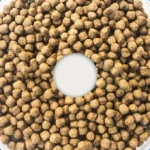

The bags arrive on a truck. You stack them in the feed room. You open them, pour the contents into feeders, and the birds eat. It’s a routine that plays out on poultry farms everywhere, day after day. But if you stop and look closely at what’s in those bags—and what’s not—questions start to emerge.
Commercial feed is a convenience. It’s formulated by nutritionists, produced in large mills, and delivered to your farm with minimal effort on your part. But convenience comes at a cost. And that cost isn’t just the price on the bag. It’s the uncertainty about ingredient quality. It’s the variability between batches. It’s the additives and fillers that you might not want in your birds’ diet. It’s the transportation and marketing costs that are built into every ton.
For poultry farmers who want more control over what goes into their birds—and who want to capture the margin that currently goes to the feed mill and the distributor—on-farm feed production offers an alternative. The technology is accessible, the economics are favorable, and the benefits extend beyond cost savings.
What’s Really in That Bag?
Commercial poultry feed is a formulated product. The base ingredients are grains, protein meals, and fats, supplemented with vitamins, minerals, and sometimes additives for growth promotion or disease prevention. The nutritional profile is designed to meet the requirements of specific classes of birds—broilers, layers, breeders—at specific stages of production.
The quality of the ingredients, however, can vary. The grain that goes into the feed may come from different sources. The protein meal may be processed differently. The vitamins may degrade during storage. The mill formulates to a minimum specification, but the actual composition can vary from batch to batch.
The consistency of the feed—the pellet quality, the particle size distribution—also varies. A mill that’s running a different formulation on the same line may not clean the equipment thoroughly between runs. Cross-contamination can occur. The pellets may be too hard or too soft. The fines content may be higher in some batches than others.
For birds, these variations matter. Poultry are sensitive to changes in diet. A sudden change in feed can reduce intake, affect growth rates, and even trigger digestive issues. In layer operations, feed changes can affect egg production and shell quality. In broilers, inconsistent feed can lead to uneven growth and higher mortality.
The Case for On-Farm Milling
Producing feed on the farm addresses these concerns at multiple levels. First, there’s the control over ingredients. When you buy raw materials—corn, soybean meal, fats, minerals—you know what you’re getting. You can test them, inspect them, and reject substandard lots. You’re not dependent on a feed mill’s sourcing decisions.
Second, there’s the consistency. When you produce your own feed, you control the formulation. You can adjust it based on the birds’ needs, the season, and the available ingredients. The milling process is under your control, so the pellet quality is consistent from batch to batch.
Third, there are the economics. The price you pay for commercial feed includes the mill’s processing costs, their profit margin, and the transportation costs to get the feed to your farm. When you produce your own feed, you eliminate these layers. The savings typically range from 15% to 30% of the cost of commercial feed.
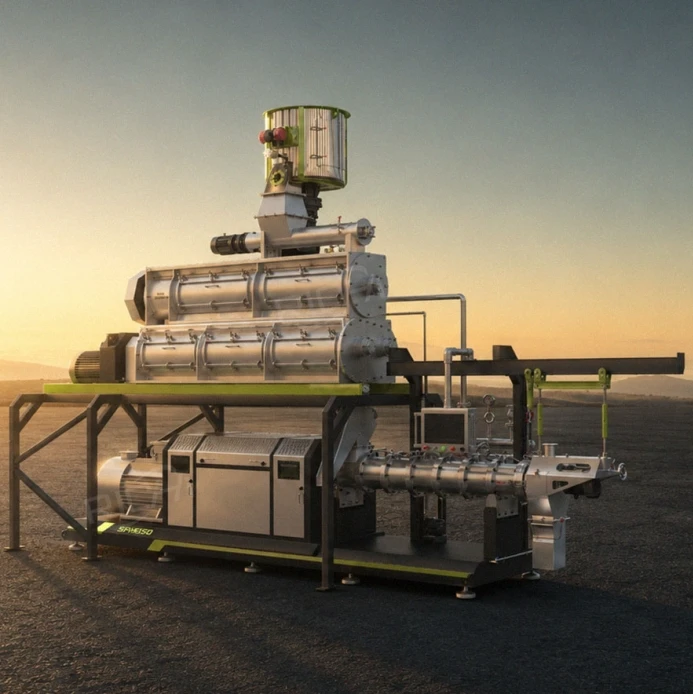
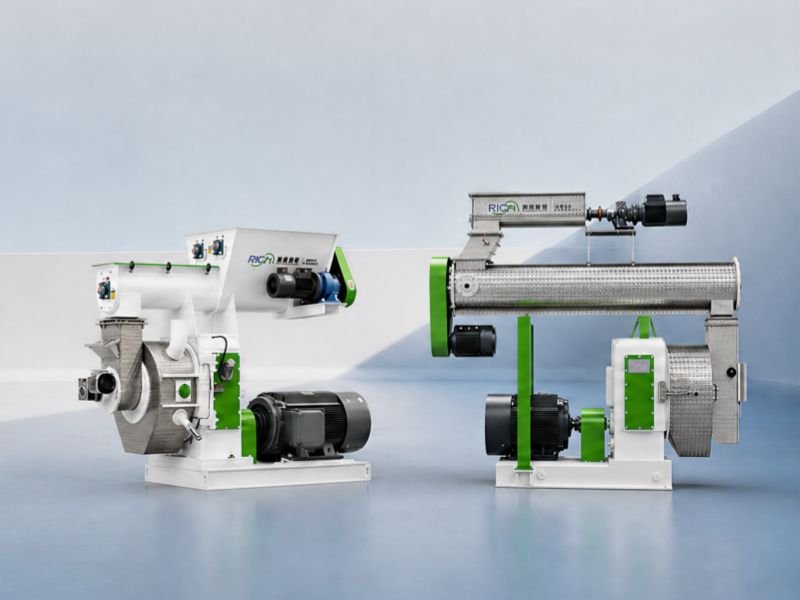
The equipment to do this is accessible. A chicken feed pellet mill is the core component. This is the machine that transforms ground ingredients into dense, uniform pellets. It’s not a large industrial plant—it’s a machine that can fit in a dedicated building on the farm, operated by one or two people.
The Journey from Ingredient to Pellet
The production of poultry feed on the farm follows a sequence of steps. Each step contributes to the quality of the finished product.
Grinding is the first step. Whole grains must be reduced to a particle size suitable for pelleting. A hammer mill is the standard equipment for this job. The screen size determines the particle size. For poultry feed, the typical particle size is 2 to 4 millimeters. The grinding step is important because it affects both the digestibility of the feed and the durability of the pellets.
Mixing follows grinding. All the ingredients—ground grains, protein meal, fat, minerals, and any additives—are combined in a mixer. The mixing must be thorough to ensure that every pellet contains the correct balance of nutrients. Uneven mixing leads to inconsistent pellets and variable bird performance.
Conditioning is the next step. The mixed material is treated with steam. This softens the particles and activates the natural binders in the ingredients. The moisture content may also be adjusted at this stage. Conditioning is essential for producing durable pellets that hold together during handling.
The conditioned material enters the pellet mill. In the automatic poultry feed pellet making machine, the material is forced through a die by rotating rollers. The friction generates heat, which melts the starches and proteins, binding the particles together. The pellets emerge as a continuous rod, which is cut to length.
After pelleting, the hot pellets are cooled. A cooler reduces the temperature and moisture content. The cooled pellets are stable and can be stored for extended periods. Screening removes fines and broken pellets, which are returned to the process.
The result is a consistent, high-quality pellet that meets the nutritional needs of the birds. The whole process, from grinding to finished pellets, can be completed in hours.
Understanding the Equipment
The pellet mill is the heart of the operation. It’s the equipment that performs the actual compression. A pellet making machine for poultry feed must be designed for the specific requirements of the material. Poultry feed has a different fat content and different binding characteristics than feed for other species.
The die is the most critical component. It determines the pellet diameter. For poultry, the pellet size is typically 2 to 4 millimeters for young birds and 4 to 6 millimeters for adults. The die must be made from a wear-resistant alloy, as the abrasive nature of the feed can wear down softer materials.
The rollers must be precisely fitted to the die. The gap between the rollers and the die affects the compression and the pellet quality. The bearings must be sealed to prevent contamination. The motor must provide sufficient power for the compression process.
The control system manages the operation. In an automatic machine, the control system monitors temperature, pressure, and feed rate. It adjusts parameters to maintain consistent pellet quality. The automation reduces the labor requirement and ensures consistent output.
The Case of the Broiler Grower
A broiler grower in the southeastern United States had been using commercial feed for years. The feed was good—the birds performed well—but the cost kept increasing. The grower calculated that feed represented about 65% of his total production costs, and the price was rising every year.
He started researching on-farm feed production. He visited other farms that had installed equipment and spoke with equipment suppliers. He ran the numbers and determined that he could reduce his feed costs by about 20% by producing his own feed.
He installed a small chicken feed pellet mill with a capacity of about 1 ton per hour. He set it up in a building adjacent to his feed storage. He bought grains in bulk and stored them in bins. He arranged for the delivery of protein meal and other ingredients. He hired a part-time operator to run the mill.
The results were immediate. His feed costs dropped by the predicted amount. The birds performed as well as they had on commercial feed. The feed was consistent from batch to batch, and the birds showed no signs of feed-related stress. The grower estimated that the equipment paid for itself in about 18 months. He’s now planning to expand his production capacity.
Quality Control in Practice
Quality control is an essential part of on-farm feed production. The process begins with the raw materials. Grains should be tested for moisture content and quality. Protein meal should be tested for protein content and amino acid profile. Minerals and vitamins should be sourced from reputable suppliers.
During processing, monitoring points include the particle size after grinding, the conditioning temperature, and the pellet durability after cooling. The finished pellets should be tested for moisture content, durability, and nutrient composition.
For farmers who are new to feed production, the quality control process may seem daunting. But the equipment suppliers can provide guidance, and the testing services are widely available. Starting with a simple quality control program and expanding it over time is a practical approach.
The Technology and the Future
The technology for on-farm feed production has evolved significantly. Modern pellet mills are efficient, reliable, and easier to operate than earlier models. The control systems automate many of the decisions that used to require operator judgment.
This evolution has made on-farm feed production accessible to a wider range of operations. Farms that previously could not justify the investment can now do so. The economic case is clear, and the technology is available.
For more detailed information on equipment specifications and system configurations, find here the resources that will help you evaluate your options. The decision to produce your own feed is a significant one, but the benefits are substantial. The birds need consistent, high-quality nutrition. Producing it on the farm puts that control where it belongs—in your hands.
A Final Perspective
Commercial feed has its place. It’s convenient, it’s available, and it works. But for poultry farmers who want more control over their costs and their birds’ nutrition, on-farm feed production offers a different path.
The path requires an investment in equipment and a willingness to learn new skills. But the returns—lower feed costs, consistent quality, and the satisfaction of producing your own feed—make it a path worth considering. The technology is ready, and the rewards are real.