Fish feed manufacturing is a highly organized industrial process that transforms raw agricultural and aquatic ingredients into nutritionally balanced, stable, and efficient feed pellets for aquaculture. As global demand for fish continues to rise, modern aquaculture depends heavily on scientifically formulated feed to ensure healthy growth, high survival rates, and maximum production efficiency.
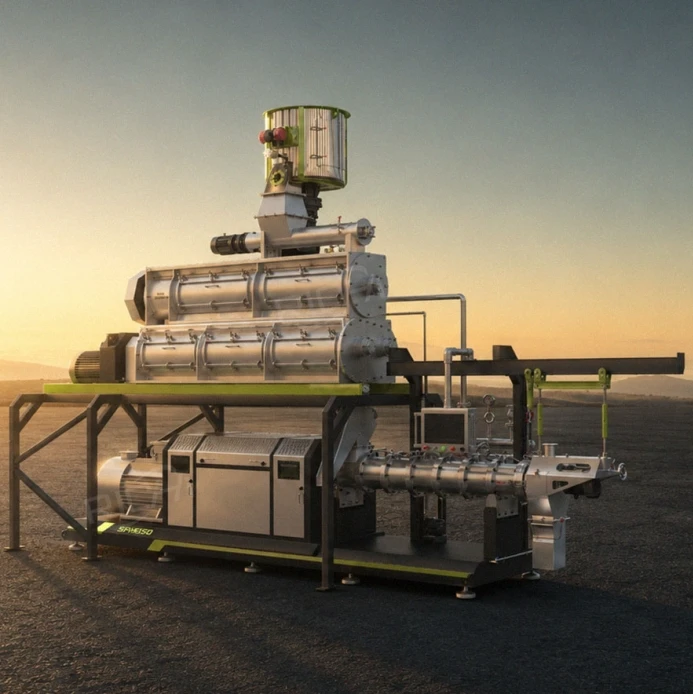
Unlike traditional feeding methods that relied on raw fish scraps or simple mixtures, today’s fish farming industry uses advanced manufacturing systems that ensure consistency, hygiene, and precise nutrition. Central to this process are industrial systems such as the fish feed production line and the fish pellet machine, which work together to produce high-quality feed at scale.
This article explains the fish feed manufacturing process step by step in detail, covering each stage from raw material selection to final packaging, while also explaining how modern equipment improves efficiency, quality, and profitability.
1. Overview of Fish Feed Manufacturing
Fish feed manufacturing is a multi-stage industrial process designed to produce pellets that meet the nutritional needs of different fish species.
The main objectives include:
- Providing balanced nutrition
- Improving feed digestibility
- Ensuring pellet stability in water
- Reducing feed waste
- Enhancing aquaculture efficiency
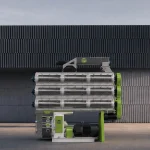
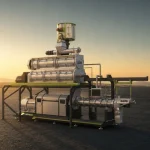
A modern fish feed production line integrates all processing stages into a continuous system for maximum efficiency and quality control.
2. Step 1: Raw Material Selection and Procurement
The first step in fish feed manufacturing is selecting high-quality raw materials.
Common ingredients include:
- Fish meal
- Soybean meal
- Corn
- Wheat flour
- Rice bran
- Cottonseed meal
- Vitamins and minerals
- Fish oil or vegetable oil
Each ingredient plays a specific nutritional role in fish growth and health.
Importance of Raw Material Quality
High-quality raw materials ensure:
- Better nutrient absorption
- Improved fish growth
- Higher feed efficiency
- Stable pellet quality
Poor-quality raw materials lead to low feed performance and higher production costs.
3. Step 2: Raw Material Cleaning and Storage
Before processing, raw materials must be cleaned and stored properly.
Cleaning process includes:
- Removing stones and impurities
- Filtering dust and debris
- Ensuring uniform quality
Storage requirements:
- Dry environment
- Moisture control
- Pest prevention
Proper storage prevents spoilage and maintains nutrient value.
4. Step 3: Grinding Process
Grinding reduces raw material particle size to improve mixing and digestion.
Hammer mills are commonly used in a fish feed production line.
Benefits of grinding:
- Improves feed digestibility
- Ensures uniform mixing
- Enhances pellet formation
- Reduces machine wear in later stages
Fine particle size is essential for high-quality fish feed.
5. Step 4: Ingredient Weighing and Formulation
At this stage, ingredients are measured according to a precise feed formula.
Objectives include:
- Ensuring balanced nutrition
- Meeting species-specific requirements
- Controlling production cost
Modern systems use automated weighing systems for accuracy.
6. Step 5: Mixing Process
Mixing ensures all ingredients are evenly distributed.
Horizontal ribbon mixers are commonly used in fish feed production lines.
Benefits of proper mixing:
- Uniform nutrient distribution
- Consistent feed quality
- Improved fish growth performance
Poor mixing leads to uneven feed quality and inconsistent results.
7. Step 6: Conditioning Process
Conditioning involves adding steam or moisture to prepare materials for pelletizing.
Benefits of conditioning:
- Softens raw materials
- Improves starch gelatinization
- Enhances pellet formation
- Increases digestibility
This step is essential before entering the fish pellet machine.
8. Step 7: Pelletizing with Fish Pellet Machine
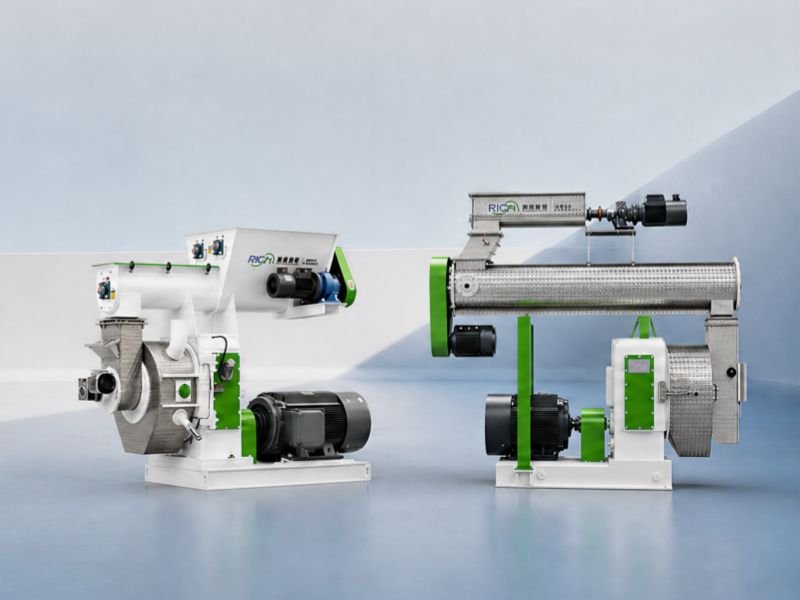
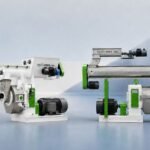
The fish pellet machine is one of the most important components in fish feed manufacturing.
It compresses conditioned feed into uniform pellets suitable for aquaculture.
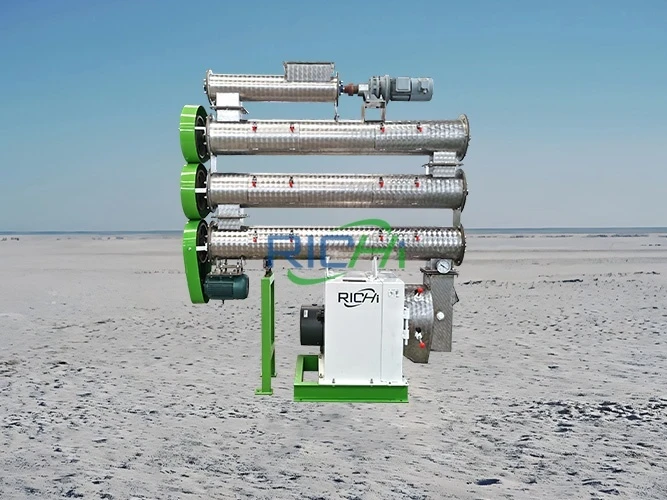
How the Fish Pellet Machine Works
- Prepared feed enters the machine
- Material is compressed under pressure
- Pellets are formed through a die
- Cutting blades control pellet size
- Pellets are discharged for further processing
Importance in Fish Feed Production
The fish pellet machine determines:
- Pellet size
- Density
- Stability in water
- Nutrient retention
Different fish species require different pellet sizes and densities.
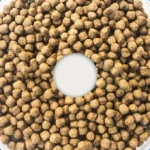
Types of Pellets Produced
- Floating pellets
- Sinking pellets
- Slow-sinking pellets
Each type is produced by adjusting machine settings and formulation.
9. Step 8: Drying Process
After pelletizing, feed contains moisture and must be dried.
Objectives of drying:
- Reduce moisture content
- Improve shelf life
- Prevent mold growth
- Increase pellet hardness
Belt dryers or rotary dryers are commonly used in fish feed production lines.
10. Step 9: Cooling Process
Freshly dried pellets are hot and must be cooled before packaging.
Benefits of cooling:
- Stabilizes pellet structure
- Prevents moisture condensation
- Improves durability
- Extends storage life
Counterflow coolers are widely used in modern systems.
11. Step 10: Oil Coating and Nutrient Enrichment
After cooling, pellets are coated with oils and additional nutrients.
Benefits include:
- Increased energy content
- Improved palatability
- Enhanced fish growth
- Better feed attraction
This step significantly improves feed performance.
12. Step 11: Screening and Grading
Screening ensures uniform product quality.
The process removes:
- Broken pellets
- Dust particles
- Oversized particles
Only high-quality pellets move to packaging.
13. Step 12: Packaging and Storage
Final pellets are packaged for transportation and storage.
Packaging requirements:
- Moisture-proof materials
- Proper sealing
- Clear labeling
Good packaging ensures feed quality remains stable during storage and transport.
14. Role of the Fish Feed Production Line
The fish feed production line integrates all manufacturing steps into a continuous system.
Main components include:
- Grinding system
- Mixing system
- Conditioning system
- fish pellet machine
- Drying system
- Cooling system
- Packaging system
Advantages of Integrated Production
- Higher production efficiency
- Consistent feed quality
- Reduced labor requirements
- Lower operational costs
- Continuous production flow
This system is essential for industrial-scale fish feed manufacturing.
https://pelletisingmachine.com/aqua-feed-machine
15. Quality Control in Fish Feed Manufacturing
Quality control ensures that feed meets nutritional and physical standards.
Key parameters include:
- Pellet hardness
- Moisture content
- Nutritional composition
- Water stability
- Pellet size uniformity
Strict quality control improves aquaculture performance.
16. Importance of Particle Size
Particle size affects:
- Digestibility
- Mixing efficiency
- Pellet quality
Uniform particle size improves fish feed production efficiency.
17. Importance of Moisture Control
Moisture affects:
- Pellet stability
- Storage life
- Mold resistance
Proper moisture control is essential throughout the production process.
18. Automation in Fish Feed Production
Modern fish feed production lines use automation systems.
Automation features:
- Automatic batching
- Temperature control
- Real-time monitoring
- Production tracking
Automation improves efficiency and reduces human error.
19. Energy Efficiency in Feed Production
Energy-efficient systems reduce operational costs.
Improvements include:
- High-efficiency motors
- Optimized machinery
- Reduced waste
Energy savings improve profitability.
20. Environmental Benefits of Fish Feed Production
Efficient fish feed manufacturing helps reduce environmental impact by:
- Lowering feed waste in aquaculture
- Improving water quality
- Reducing pollution
This supports sustainable aquaculture development.
21. Economic Importance of Fish Feed Manufacturing
Fish feed production is a highly profitable industry due to:
- High global demand
- Growing aquaculture industry
- Efficient production systems
It is a key sector in agricultural processing.
22. Challenges in Fish Feed Manufacturing
Despite its advantages, challenges include:
- High initial investment
- Raw material price fluctuations
- Technical complexity
- Equipment maintenance
Proper planning helps overcome these issues.
23. Maintenance of Fish Pellet Machine
Proper maintenance ensures long-term efficiency.
Maintenance tasks include:
- Cleaning pellet chamber
- Replacing worn dies
- Lubricating moving parts
- Monitoring system performance
Regular maintenance improves production stability.
24. Future Trends in Fish Feed Manufacturing
Future developments include:
- AI-based feed optimization
- Smart aquaculture systems
- Precision nutrition technology
- Fully automated production lines
These innovations will further improve efficiency and sustainability.
Conclusion
The fish feed manufacturing process is a complex but highly structured system that transforms raw materials into nutritionally balanced, high-quality pellets suitable for modern aquaculture. Each step—from raw material selection and grinding to mixing, conditioning, pelletizing, drying, cooling, and packaging—plays a crucial role in determining final feed quality and performance.
Modern technologies such as the fish feed production line and fish pellet maker have revolutionized the industry by improving efficiency, ensuring consistency, and enabling large-scale production. As global demand for fish continues to grow, advanced feed manufacturing systems will remain essential for supporting sustainable aquaculture and improving food security worldwide.