



Sinking fish feed production is a carefully controlled process that combines feed formulation, raw material preparation, grinding, batching, mixing, conditioning, pelletizing, drying, cooling, screening, coating, and packaging. Unlike ordinary feed manufacturing, sinking feed must have physical characteristics that allow the pellets to move through the water and reach the feeding zone of the target fish.
The production process therefore needs to control not only nutritional composition but also pellet density, size, hardness, durability, moisture, and water stability.
High-quality sinking feed for fish is commonly used for fish species and aquaculture systems where feed is consumed below the water surface. Depending on the species, sinking feed may be designed to sink rapidly or at a controlled speed. The pellets also need to remain intact in water long enough for fish to consume them.
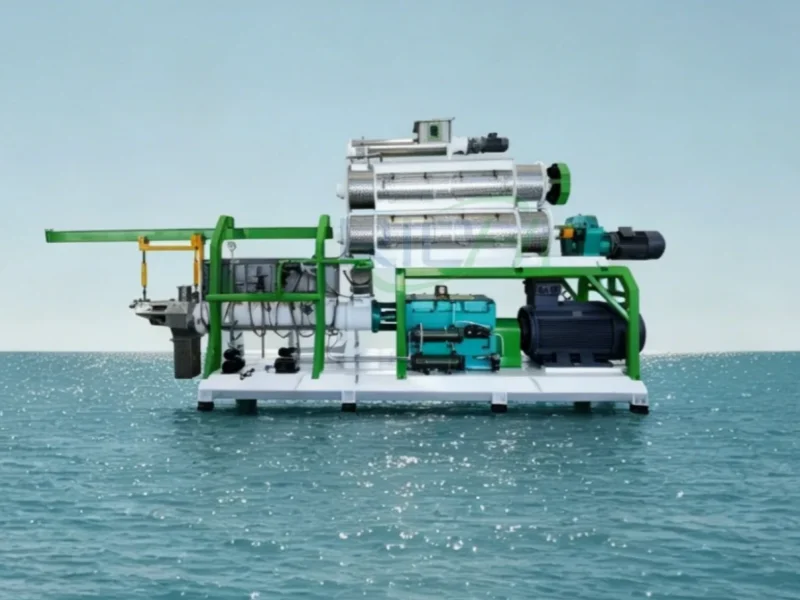
For commercial production, sinking fish feed is normally manufactured through a complete processing line rather than a single machine. Different pieces of equipment work together to transform raw ingredients into finished pellets.
This article explains how sinking fish feed production works, what equipment is involved, how each stage affects pellet quality, and how manufacturers can improve production efficiency.
What Is Sinking Fish Feed?
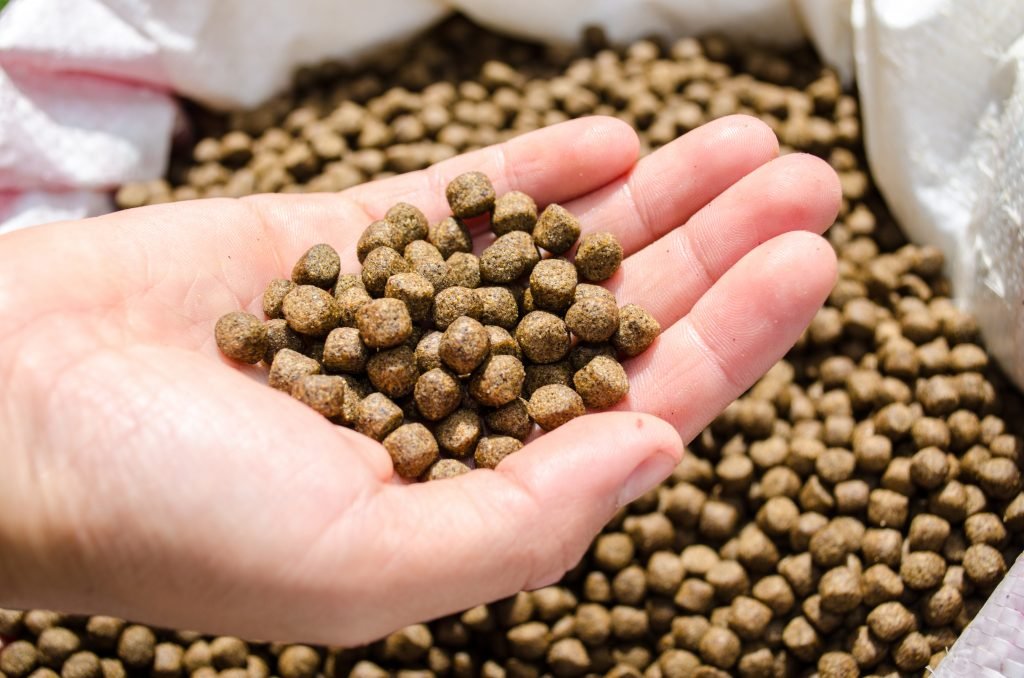
Sinking fish feed is feed manufactured in pellet form that is designed to move downward through water.
Unlike floating feed, which remains at or near the surface, sinking feed has sufficient density to overcome buoyancy.
The required sinking behavior depends on the target fish.
Some bottom-feeding species may require pellets that sink quickly to the bottom. Other species may feed in the middle or lower water column and require pellets that sink more gradually.
Therefore, there is no single sinking speed that is suitable for every fish species.
Important physical characteristics include:
- Pellet density
- Pellet diameter
- Pellet length
- Sinking speed
- Water stability
- Pellet hardness
- Durability
- Moisture content
- Surface condition
These properties are affected by both the feed formula and the processing conditions.
Why Is the Production Process Important?
Sinking feed production is not simply a matter of compressing ingredients into pellets.
Every processing stage can influence the final product.
For example, poor grinding may produce uneven particles. Poor mixing may create nutrient variation. Incorrect conditioning may result in weak pellets. Improper pelletizing may produce inconsistent density. Poor drying can affect moisture and durability. Insufficient cooling can create storage problems.
Therefore, the production process should be considered as one integrated system.
A properly designed production line allows manufacturers to control each stage and maintain stable product quality.
Step 1: Raw Material Receiving
The first stage is receiving raw materials.
Common ingredients for sinking fish feed include:
- Fish meal
- Soybean meal
- Corn
- Wheat
- Wheat bran
- Rice bran
- Corn gluten meal
- Rapeseed meal
- Peanut meal
- Poultry by-products
- Vegetable protein sources
- Fish oil
- Vegetable oil
- Vitamins
- Minerals
- Amino acids
- Attractants
- Binders
- Functional additives
The exact ingredients depend on the target species, growth stage, formula, and local ingredient availability.
Incoming raw materials should be inspected before entering production.
Important checks include moisture, appearance, impurities, particle size, storage condition, and other relevant quality parameters.
Consistent raw material quality provides a more stable starting point for the production process.
Step 2: Raw Material Storage
After receiving, materials are stored in suitable bins, silos, warehouses, or other storage facilities.
Different ingredients may require different storage conditions.
For example, dry meals and grains should be protected from moisture, while oils require appropriate storage tanks or containers.
Proper storage helps prevent:
- Moisture absorption
- Mold growth
- Pest contamination
- Nutrient deterioration
- Cross-contamination
Storage management is especially important for large feed factories because raw materials may remain in storage for extended periods.
Step 3: Raw Material Cleaning
Before grinding, raw materials should pass through a cleaning process.
Raw materials can contain stones, metal particles, fibers, dust, and other unwanted materials.
A cleaning system may include:
- Vibrating screens
- Drum screens
- Magnetic separators
- Destoners
- Dust collection equipment
Magnetic separators remove ferrous metal particles and protect downstream equipment.
Screens remove larger impurities.
Effective cleaning improves both equipment safety and feed quality.
Step 4: Grinding
Grinding reduces raw materials to a suitable particle size.
A hammer mill is commonly used for feed grinding.
For some aquatic feed formulas, particularly those requiring small pellet diameters, finer grinding may be necessary.
A superfine grinder can be used when very small particle sizes are required.
Proper grinding provides several benefits:
- Better mixing
- More uniform particles
- Improved pellet formation
- Better pellet surface quality
- Reduced weak points in the pellet
However, grinding too finely can increase energy consumption.
The ideal particle size depends on the formula and final pellet specification.
Step 5: Automatic Batching
After grinding, ingredients are weighed according to the feed formula.
In commercial feed plants, an automatic batching system can accurately measure different ingredients.
This improves formula consistency and reduces manual weighing errors.
Accurate batching is particularly important when the formula contains small quantities of vitamins, minerals, amino acids, or other additives.
The batching system should be designed according to:
- Number of ingredients
- Batch size
- Required accuracy
- Production capacity
- Automation level
Step 6: Mixing
The weighed ingredients are transferred to a feed mixer.
The purpose of mixing is to distribute all ingredients evenly throughout the batch.
A good mixing process helps ensure that each pellet contains a relatively consistent nutrient composition.
Mixing time should be optimized.
Insufficient mixing may produce nutrient variation, while excessive mixing wastes time and energy.
Micro-ingredients can also be premixed before entering the main mixer to improve distribution.
Step 7: Conditioning
After mixing, the feed material enters the conditioning stage.
Steam and moisture are introduced into the material to increase temperature and moisture and prepare it for pelletizing.
Conditioning can improve:
- Pellet formation
- Pellet durability
- Starch gelatinization
- Production stability
- Pellet mill throughput
The exact conditioning parameters depend on the feed formula.
A high-protein formula may behave differently from a formula containing a higher proportion of grains or starch.
Therefore, steam addition and conditioning time should be controlled according to the specific product.
Step 8: Pelletizing
Pelletizing is the stage where loose feed material becomes compact pellets.
Conditioned material enters the pellet mill and is compressed through die holes.
The die determines the basic pellet diameter.
Important pelletizing parameters include:
- Die hole diameter
- Die compression ratio
- Roller clearance
- Feed rate
- Material moisture
- Conditioning temperature
- Formula composition
For sinking feed, pellet density is particularly important.
The pellets must be dense enough to sink but should still have appropriate physical characteristics for the target fish.
The pellet mill is an important part of the production line, but it is not the entire production system.
The upstream and downstream equipment also influence the final pellet quality.
(Related machine:https://pelletisingmachine.com/fish-feed-pellet-making-machine/)
Step 9: Controlling Pellet Density
Pellet density plays a major role in sinking behavior.
A pellet with insufficient density may float or remain suspended.
A pellet with excessive density may sink too quickly.
The target density depends on the fish species and feeding environment.
Density can be affected by:
- Ingredient selection
- Particle size
- Moisture
- Conditioning
- Compression
- Pellet diameter
- Fat content
- Pellet structure
Therefore, density should be tested and adjusted during product development.
Step 10: Pellet Cutting
After passing through the die, the continuous strands of material are cut into pellets.
The knife position affects pellet length.
Pellet length should correspond to the pellet diameter and target fish size.
If pellets are too long, smaller fish may have difficulty consuming them.
If pellets are too short, feeding and handling characteristics may change.
Consistent knife adjustment helps produce uniform pellets.
Step 11: Drying
Fresh pellets normally contain excess moisture and need to be dried.
A fish feed dryer removes moisture under controlled conditions.
The drying process should reduce moisture without damaging pellet structure.
Important drying factors include:
- Air temperature
- Residence time
- Airflow
- Pellet diameter
- Initial moisture
- Formula
- Production capacity
Insufficient drying can result in excessive final moisture and poor storage stability.
Excessive drying can increase energy consumption and potentially reduce pellet durability.
Therefore, drying should be carefully controlled.
Step 12: Cooling
After drying, the pellets are hot and need to be cooled.
A pellet cooler reduces the temperature of the finished pellets and helps stabilize their moisture.
Cooling is important before screening and packaging.
If hot pellets are packed immediately, moisture may condense inside the package.
Proper cooling helps improve:
- Storage stability
- Pellet durability
- Moisture uniformity
- Packaging performance
Step 13: Screening
After cooling, pellets pass through a screening machine.
The screen separates finished pellets from:
- Fines
- Broken pellets
- Oversized particles
Screening improves the consistency of the final product.
A portion of the fines may be recycled back into production depending on the process design.
However, if the production line continuously generates a large amount of fines, the cause should be investigated rather than simply increasing the screening capacity.
Step 14: Post-Pellet Coating
Some sinking feed formulas require oil or other functional ingredients to be added after pelletizing.
A coating machine can apply:
- Fish oil
- Vegetable oil
- Attractants
- Enzymes
- Other functional additives
Post-pellet coating can be particularly useful when heat-sensitive ingredients are involved.
The coating system should distribute the additives uniformly across the pellet surface.
Uneven coating can cause differences in nutritional composition and product appearance.
Step 15: Finished Product Storage
After screening and optional coating, finished pellets may enter a finished-feed storage system.
Storage bins, silos, or warehouses should protect the feed from moisture, excessive heat, pests, and contamination.
Good warehouse management helps preserve feed quality before delivery to customers or farms.
Step 16: Packaging
The final stage is packaging.
Automatic packing machines can weigh and fill the finished feed into bags.
The system may include:
- Automatic weighing
- Bag filling
- Bag sealing
- Date coding
- Labeling
- Conveying
- Palletizing
Packaging should protect the pellets from moisture and physical damage during transportation.
How Sinking Feed Quality Is Controlled
The production process alone is not enough. Quality must be monitored at different stages.
Important quality parameters include:
Pellet Diameter
Pellet diameter should match the target fish size.
Pellet Density
Density determines whether the feed sinks appropriately.
Moisture
Moisture affects storage stability and pellet durability.
Water Stability
The pellets should remain intact long enough for fish to consume them.
Durability
Durable pellets produce fewer fines during transportation.
Sinking Speed
The sinking rate should correspond to the feeding behavior of the target species.
Nutritional Composition
Protein, fat, fiber, vitamins, minerals, and other nutrients should meet the intended formula.
How Different Species Affect the Production Process
Different fish species require different feed specifications.
For example, carp may require a different nutritional formula and pellet size from catfish.
Catfish may require sinking pellets that reach the lower water layer efficiently.
Trout and salmon generally require nutrient-dense formulas with different protein and fat characteristics.
Juvenile fish require smaller pellets than adult fish.
Therefore, a flexible production line is useful for commercial feed manufacturers.
The formula, die, conditioning conditions, and other parameters can be changed according to the product.
Factors Affecting Sinking Performance
Several factors determine whether feed sinks correctly.
Formula Composition
Ingredient density and composition influence the physical structure of the pellet.
Grinding
Fine and uniform particles can help create more compact pellets.
Moisture
Moisture affects compression and pellet formation.
Conditioning
Proper conditioning can improve pellet formation and density.
Die Compression
The compression ratio affects pellet structure and density.
Pellet Diameter
Pellet size influences both density and sinking behavior.
Fat Content
High levels of oil can affect pellet structure and processing behavior.
For this reason, sinking behavior should always be evaluated as part of the complete production process.
How to Improve Sinking Fish Feed Production Efficiency
Manufacturers can improve efficiency in several ways.
Match Equipment Capacity
The grinder, mixer, pellet mill, dryer, cooler, screen, and packing machine should have compatible capacities.
A bottleneck in one section can reduce the output of the entire line.
Automate Batching
Automatic batching improves formula accuracy and reduces manual labor.
Optimize Grinding
Use the appropriate grinding fineness rather than automatically grinding all materials as finely as possible.
Improve Conditioning
Stable steam conditioning can improve pellet quality and production efficiency.
Maintain the Pellet Mill
Regularly inspect dies, rollers, bearings, lubrication systems, and other components.
Reduce Pellet Damage
Use appropriate conveyors and minimize unnecessary transfer points.
Optimize Drying
Control airflow, temperature, and residence time to achieve the desired moisture without excessive energy consumption.
Complete Equipment for Sinking Fish Feed Production
Commercial production normally requires a complete processing system.
The main equipment may include:
- Raw material receiving system
- Storage bins or silos
- Cleaning machines
- Magnetic separators
- Hammer mills
- Superfine grinders
- Automatic batching system
- Feed mixer
- Steam conditioner
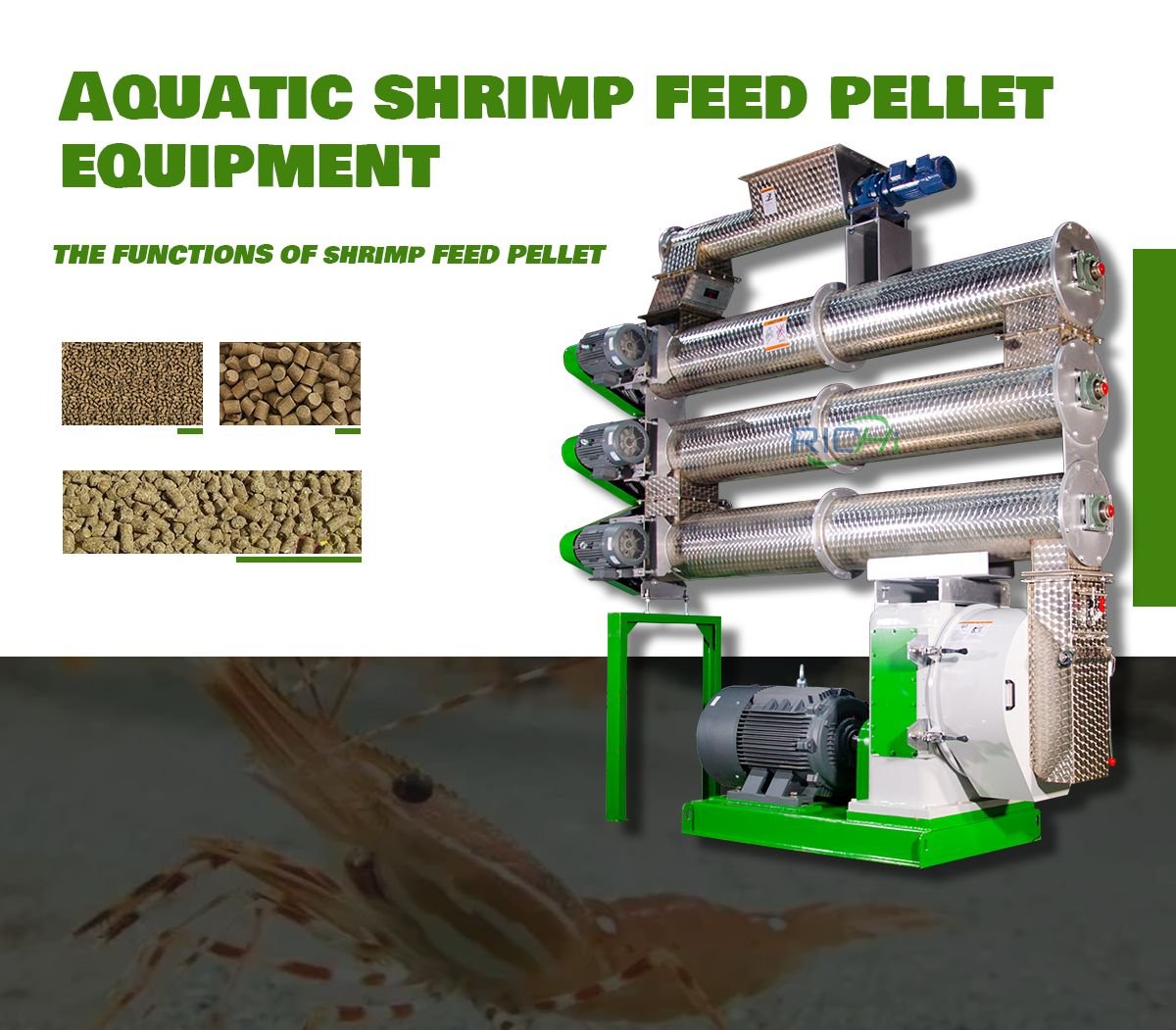
- Fish feed pellet mill
- Pellet dryer
- Pellet cooler
- Vibrating screen
- Coating machine
- Conveyors
- Bucket elevators
- Finished product storage
- Automatic packing machine
- Dust collection system
- Electrical control system
Not every project requires every machine.
The equipment configuration should be customized according to production capacity, formula, raw materials, pellet diameter, automation level, and factory layout.
(Learn more:https://pelletisingmachine.com/sinking-fish-feed-machine/)
Why Complete Process Design Matters
A pellet mill cannot compensate for problems in other sections of the production line.
For example, if grinding capacity is too low, the pellet mill cannot operate continuously.
If the dryer has insufficient capacity, pellet production must be reduced.
If the cooler is too small, finished pellets cannot be packaged efficiently.
If conveying systems cause excessive pellet breakage, the final product may contain too many fines.
Therefore, the production line should be designed as an integrated system.
This is especially important when producing sinking feed for fish, because sinking performance depends on multiple physical properties that are influenced by different stages of processing.
How RICHI Can Provide a Sinking Fish Feed Solution
RICHI Machinery can design complete fish feed processing systems according to the customer’s raw materials, formula, production capacity, pellet specifications, and factory conditions.
The solution can integrate:
- Raw material cleaning
- Grinding
- Batching
- Mixing
- Conditioning
- Pelletizing
- Drying
- Cooling
- Screening
- Coating
- Conveying
- Packaging
- Electrical control
For projects producing multiple feed specifications, the production line can be designed with suitable flexibility.
For small and medium-sized plants, a semi-automatic configuration may be suitable.
For large commercial factories, automatic batching, centralized control, automatic packing, and integrated material handling can improve production efficiency.
The goal is not simply to install individual machines but to create a balanced processing system in which each stage supports the next stage.
Frequently Asked Questions
What is sinking fish feed?
Sinking fish feed is feed designed to move downward through the water and be consumed below the water surface.
How is sinking fish feed produced?
The general process includes raw material receiving, cleaning, grinding, batching, mixing, conditioning, pelletizing, drying, cooling, screening, coating, and packaging.
What makes fish feed sink?
Pellet density is one of the most important factors. Formula composition, moisture, grinding, conditioning, compression, pellet size, and pellet structure can all influence sinking behavior.
Can the same pellet mill produce different sinking feed sizes?
Yes. Different dies can generally be used to produce different pellet diameters, provided the pellet mill and process are suitable for the required specifications.
Why does sinking feed need to be dried?
Drying removes excess moisture after pelletizing and improves storage stability.
Why is cooling required after drying?
Cooling reduces pellet temperature and helps stabilize moisture before screening and packaging.
How can I reduce fines in sinking fish feed?
Improve grinding, mixing, conditioning, pelletizing, drying, cooling, and conveying. Excessive mechanical impact during transportation can also create fines.
Can sinking feed be produced automatically?
Yes. Commercial plants can use automatic batching, centralized control, automatic material handling, automatic packing, and other automation systems.
Is the pellet mill the most important machine?
The pellet mill is a key part of the production line, but the final feed quality depends on the complete process. Grinding, batching, mixing, conditioning, drying, cooling, and screening all influence the final product.
Conclusion
Sinking fish feed production works through a series of interconnected processing stages. Raw materials are first received, stored, cleaned, and ground. They are then accurately batched and mixed before steam conditioning and pelletizing. After pellet formation, the feed is dried, cooled, screened, optionally coated, and finally packed for storage and transportation.
The physical properties of sinking feed for fish are controlled throughout this process. Pellet density, diameter, moisture, durability, water stability, and sinking speed must be matched to the requirements of the target fish species.
For commercial production, a complete processing system is more effective than focusing on a single machine. The grinder, mixer, conditioner, pellet mill, dryer, cooler, screen, coating system, conveying equipment, and packing system should be properly matched.
With suitable formulation, process control, equipment selection, and quality testing, manufacturers can produce stable sinking feed for different aquaculture applications while maintaining efficient and reliable production.